
Clean Water for Everyone: Why Group Hydration Demands the Right Filter
The best group camping water filter keeps your whole crew hydrated safely — without anyone taking turns pumping for 20 minutes. Here are the top options at a glance:
| Filter | Capacity | Flow Rate | Weight | Best For |
|---|---|---|---|---|
| MSR AutoFlow XL | 10L | 1.75 L/min | 12 oz | Large groups, basecamps |
| Platypus GravityWorks | 4L | 1.75 L/min | 11.5 oz | Small groups, backpacking |
| Katadyn Gravity Camp 6L | 6L | 2 L/min | 10 oz | Mid-size groups |
| RapidPure 9L Gravity Purifier | 9L | 5 L/min | 24 oz | Groups needing virus protection |
| MSR Trail Base | 4L | 1 L/min | 16.3 oz | Versatile group use |
Getting clean water for one person on the trail is easy. Getting it for four, six, or ten people is a completely different problem.
Everyone needs to drink. A lot. On a hard hiking day, each person can need two to four liters. For a group of six, that’s up to 24 liters — every single day.
Passing around a squeeze filter just doesn’t cut it. Slow flow rates, sore hands, and long waits at the water source create frustration fast. And that’s before you even think about the risk of someone getting sick from contaminated water.
Waterborne pathogens like Giardia, Cryptosporidium, and E. coli are invisible. They live in rivers, lakes, and streams that look perfectly clean. One person drinking untreated water can mean the whole group dealing with a medical emergency miles from the nearest trailhead.
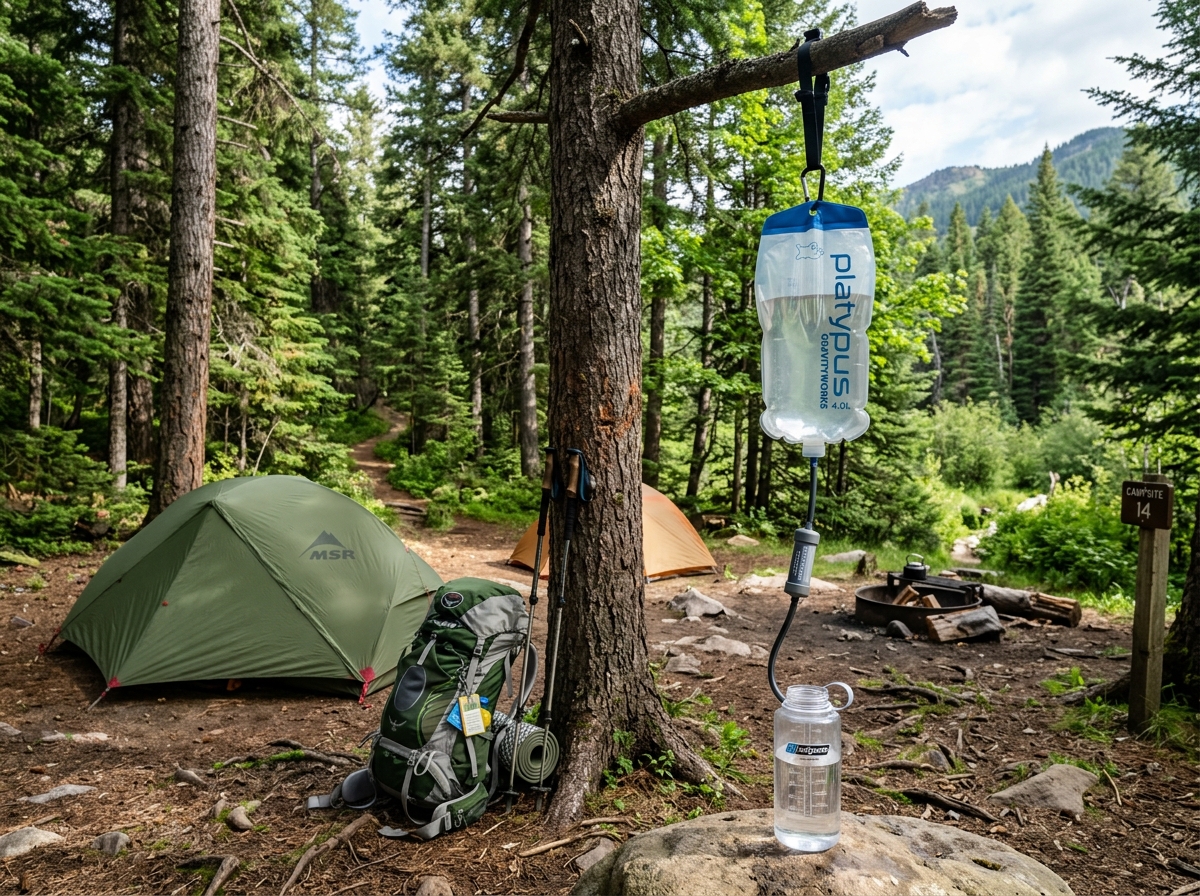
The good news? Gravity-fed water filters solve most of these problems in one go. Fill the bag, hang it from a branch, and let physics do the work while you set up camp. No pumping. No waiting around. Just clean water flowing into your reservoir.
This guide covers the best systems on the market for groups of all sizes — so you can spend less time filtering and more time enjoying the wilderness.

What Makes the Best Group Camping Water Filter?
When we look for the best group camping water filter, we aren’t just looking for something that works; we’re looking for something that thrives under pressure. A single hiker might be okay with a straw or a small squeeze bottle, but once you add three or four more people to the mix, those individual solutions become a bottleneck.
The primary characteristic of an ideal group system is passivity. Gravity-Fed Water Filters: The Perfect Solution for Group Camping Trips work by using the weight of the water to push it through the filter media. This means while the water is processing, your group can be busy pitching tents, gathering firewood, or starting dinner.
Efficiency is also measured by the weight-to-volume ratio. You want a system that can provide 10 liters of water but doesn’t weigh five pounds in your pack. Modern hollow-fiber technology allows for high flow rates—often between 1.75 to 2 liters per minute—while keeping the entire kit under a pound.
Durability is the final pillar. Group gear gets handled by multiple people, often in a hurry. The reservoirs need to be puncture-resistant, and the hoses should have secure connections to prevent leaks. Following Portable Water Filter Camping Tips 2026 can help ensure your gear survives the rigors of a multi-day trek.
High-Capacity Reservoirs for the Best Group Camping Water Filter
Size matters when you’re responsible for a crowd. Small reservoirs mean constant trips back and forth to the stream, which is exactly what we want to avoid. A 10-liter bag, like the one found in the AutoFlow XL 10L Gravity Water Filter for Groups | MSR – Cascade Designs, is a game-changer for basecamps.
With 10 liters of capacity, you can fill the bag once and have enough water for a group of four to have a full liter of drinking water each, plus plenty left over for a large pot of pasta and morning coffee. This massive capacity allows for true multi-tasking. You aren’t just filtering water; you’re managing a mobile utility station. For the best results, consult our guide on Setting Up Gravity Water Filters at Campsites: A Comprehensive Guide to learn how to optimize your hang height for maximum flow.
Lightweight Designs for the Best Group Camping Water Filter
While capacity is king at camp, weight is the dictator on the trail. If you are backpacking, every ounce counts. This is where systems like the Platypus GravityWorks Group Camping Water Filter System, 4-Liter | Ridge & River shine. At just 11.5 ounces for a dual-reservoir system, it provides a perfect balance for small to mid-sized groups.
These systems use hollow-fiber membranes that are incredibly light but feature thousands of tiny tubes that trap bacteria and protozoa. Because they pack down to the size of a one-liter bottle, they don’t hog space in your pack. For more advice on balancing gear weight with group needs, check out our Tips for Group Hiking Hydration Systems.
Top-Rated Gravity Systems for Large Groups
Choosing the best group camping water filter often comes down to the specific needs of your trip—whether it’s a fast-and-light thru-hike or a stationary basecamp.
- MSR AutoFlow XL (10L): This is the heavyweight champion of volume. It filters at 1.75 liters per minute and features a massive 10-liter reservoir. It’s built with a 0.2-micron hollow-fiber filter that meets EPA standards for removing bacteria and protozoa.
- Platypus GravityWorks (4L): A favorite for its simplicity. It includes two bags—one for “dirty” water and one for “clean” water. It can filter 4 liters in about 2.5 minutes. It’s famous for being “insanely light” for its capacity.
- RapidPure 9L Gravity Purifier: If you need more than just a filter, this is a top contender. The 9L Camping Gravity Filter Purifier | RapidPure uses specialized technology to remove 99.99% of viruses in addition to standard pathogens. It features a high flow rate of up to 5 liters per minute and, while slightly heavier at 24 oz, offers peace of mind in high-risk areas.
- Katadyn Gravity Camp 6L: This mid-sized option weighs only 10 ounces and boasts a flow rate of 2 liters per minute. It’s a great “middle-of-the-road” choice for groups of 3-5 people.
When you Stop Squeezing and Start Flowing with These Gravity Filters, you realize that these systems typically offer a lifespan of around 1,500 liters. That is enough to last most groups several years of regular adventure before needing a replacement cartridge.
Understanding Contaminants and Virus Protection
Before you head out, we need to talk about what’s actually in that water. Most backcountry water filters are designed to remove two main things: bacteria (like E. coli and Salmonella) and protozoa (like Giardia and Cryptosporidium). Understanding the Dangers of Bacteria and Protozoa in Natural Water Sources is the first step in staying safe.
However, there is a third class of pathogen: viruses. Viruses like Norovirus or Hepatitis A are much smaller than bacteria—often 0.02 to 0.3 microns. Most standard hollow-fiber filters (which usually have a 0.2-micron pore size) cannot physically catch them.
So, when do you need a purifier instead of just a filter?
- International Travel: In developing countries with poor sewage control, viruses are a major concern.
- High-Traffic Areas: Popular campsites with improper waste disposal can lead to viral contamination.
- Vulnerable Populations: If your group includes young children or immunocompromised individuals, the extra protection of a purifier is recommended.
For those traveling by RV or setting up a semi-permanent camp, a more robust system like the iSpring CW31-BV 3-Stage RV Water Filtration System for Campers, SGS-tested Bacteria and Viruses Removal, 3/4” Lead-Free Brass Hose Quick Connectors, Tankless, High Capacity provides high-capacity protection that is SGS-tested for virus removal. Knowing the Common Waterborne Pathogens Hikers Should Know helps you decide if a standard filter or a full purifier is right for your next trip.
Maintenance and Longevity for Group Systems
Even the best group camping water filter will eventually slow down if you don’t take care of it. The biggest enemy of any filter is sediment—mud, silt, and glacial flour. These tiny particles clog the pores of the filter, turning a 2-liter-per-minute flow into a frustrating drip.
The most important maintenance task is backflushing. This involves pushing clean water backward through the filter to dislodge trapped debris. Most gravity systems, like the Platypus GravityWorks, make this easy: you simply hold the clean bag above the dirty bag for a few seconds. Learning How to Maintain Your Filters for Longevity and Performance can extend the life of your cartridge significantly.
Here are a few expert tips for group maintenance:
- Pre-filtration: If the water is murky, wrap a bandana or coffee filter around the intake. This catches the “big stuff” before it hits your expensive filter.
- Sediment Settling: If you have time, let a bucket of silty water sit for an hour. The heavy dirt will settle to the bottom, allowing you to scoop the clearer water from the top.
- Avoid Cross-Contamination: Keep your “dirty” hoses and bags separate from your “clean” ones. Preventing Cross-Contamination in Water Filters: Best Practices is vital when one filter is serving an entire group.
Frequently Asked Questions about Group Water Filtration
How do group filters handle muddy or silty water?
Most gravity filters are designed for clear water, but they can handle some turbidity. However, tannins (which make water look like tea) and heavy silt will clog a filter quickly. If you’re forced to use a “gross” source, pre-filtering is your best friend. Some systems, like the MSR Guardian, have self-cleaning mechanisms that handle silt better than others. For very difficult water, you might consider Don’t Drink the Mud: A Guide to UV Water Purifiers for Camping, though these are usually better for clear water that needs purification.
Can these filters be used in freezing temperatures?
This is a critical safety point: Never let a hollow-fiber filter freeze. If water is inside the tiny fibers and it freezes, it expands and cracks the filter. These cracks are invisible to the naked eye but large enough to let bacteria through. If you are camping in the cold, sleep with your filter in your sleeping bag to keep it warm. When Assembling a Practical Portable Water Purification Kit, always include a backup if you suspect your filter has been compromised by frost.
What are the best backup methods for group camping?
No matter how good your filter is, you should always have a Plan B. If your main gravity bag rips or the filter freezes, your group still needs to drink. We recommend carrying chlorine dioxide tablets or drops. They are lightweight, have a long shelf life, and are effective against most pathogens. While they take longer to work (up to 4 hours for Cryptosporidium), they are a reliable safety net. You can learn more about the trade-offs in Chemical Versus Mechanical Methods of Water Purification for Hikers.
Conclusion
At Total Cobre, we know that the success of a group trip often depends on the smallest details—and nothing is more important than access to clean, safe water. Choosing the best group camping water filter means looking at your group size, your destination, and your willingness to do manual labor (or lack thereof!).
For most crews, a gravity-fed system is the clear winner. It offers the best balance of flow rate, ease of use, and packability. Whether you choose a high-capacity 10-liter monster for a basecamp or a lightweight 4-liter system for the trail, you’re making an investment in your group’s health and happiness.
Ready to stop pumping and start enjoying the view? Gravity-Fed Water Filters: The Perfect Solution for Group Camping Trips are the way to go. Stay hydrated, stay safe, and we’ll see you on the trail!
