
The Best Portable Water Filters for Home: Quick Picks
The best portable water filters for home are listed below, ranked by overall performance and certified contaminant removal:
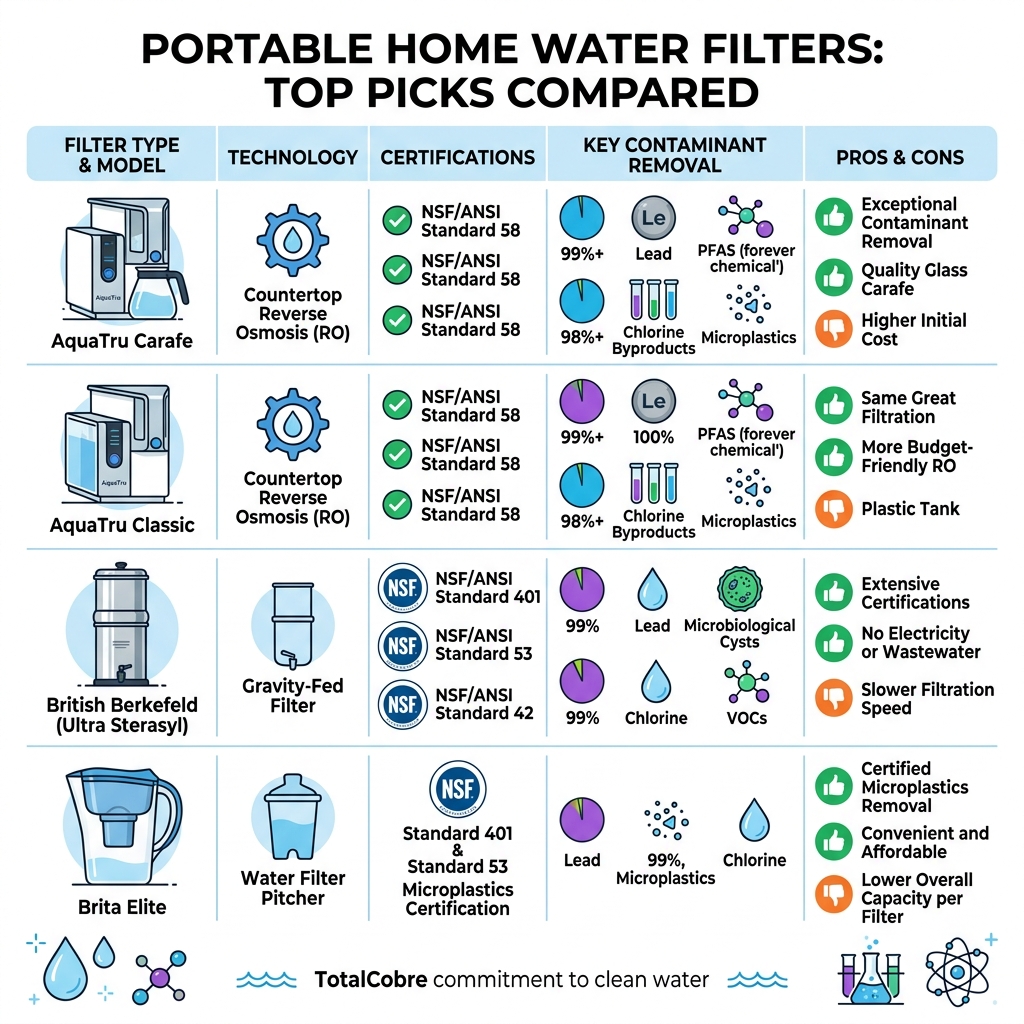
- AquaTru Carafe – Best overall; countertop reverse osmosis with glass carafe; 100% contaminant elimination in testing
- AquaTru Classic – Runner-up; same RO technology, Tritan plastic tank
- British Berkefeld (Ultra Sterasyl) – Best gravity filter; NSF/ANSI 401, 42, and 53 certified; no wastewater
- Culligan MaxClear – Budget gravity option; solid performance but some lab concerns
- Brita Elite – Best certified pitcher; the only Brita filter with official microplastics certification
Tap water isn’t as clean as it looks. Studies show that microplastics, lead, PFAS (“forever chemicals”), and chlorine byproducts are common in municipal water across the US. Most people don’t know what’s actually in their glass.
The good news? You don’t need a complex plumbing installation to fix it.
Portable home water filters sit on your counter, require no tools to set up, and can remove up to 100% of key contaminants — all without wasting much water or breaking the bank.
Whether you’re a hiker who already thinks about water quality on the trail, or just someone who wants cleaner drinking water at home, the right filter makes a real difference. NSF/ANSI 401 certification, for example, requires a filter to remove at least 85% of microplastics ranging from 0.5 to 1 micrometer in size — a meaningful benchmark to look for.
One important step before buying: test your tap water first. Knowing your specific contaminants helps you choose the right filter technology — reverse osmosis, gravity-fed, or pitcher.
Basic best portable water filters for home glossary:
Why Microplastics and Contaminants Matter in Residential Water
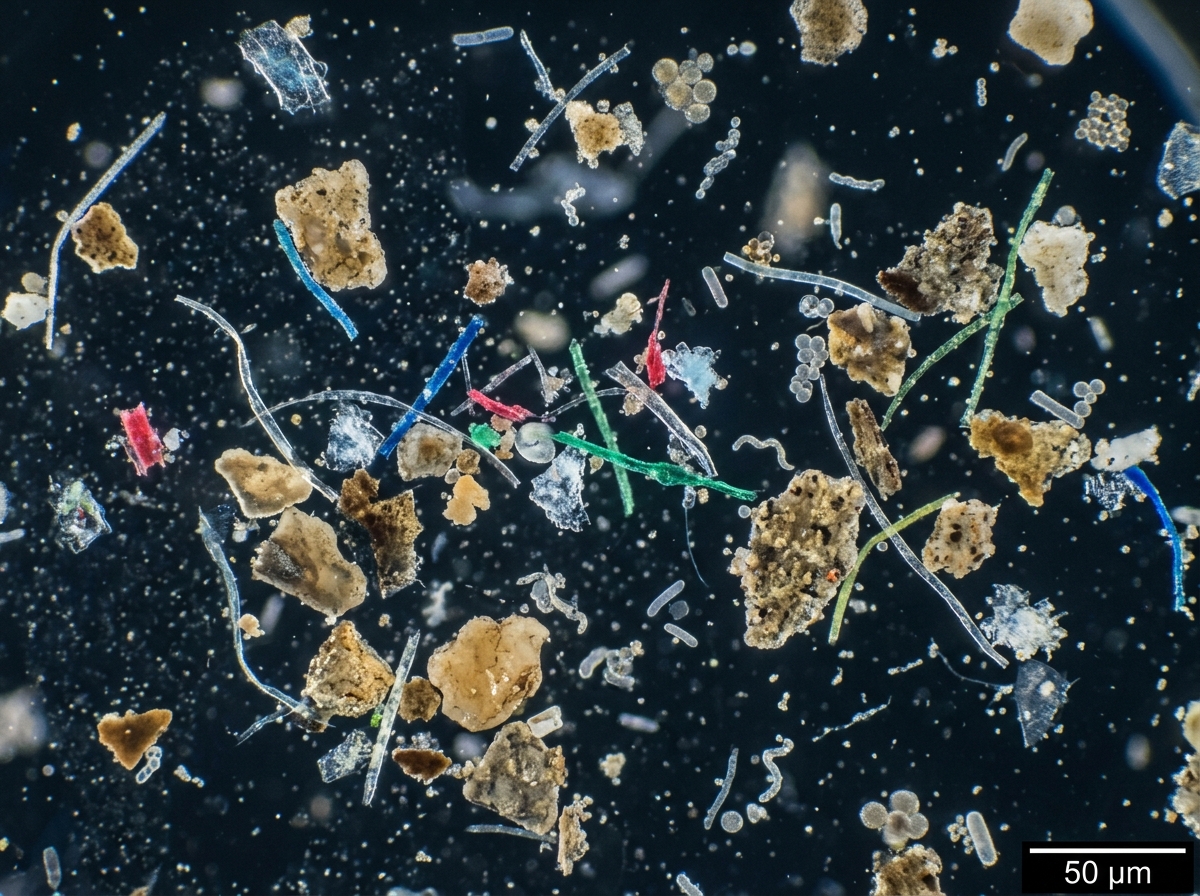
When we think about water quality, we often picture a pristine mountain stream or a murky pond on a hiking trail. However, the water flowing from your kitchen faucet carries its own set of “invisible hitchhikers.” Microplastics are now a global concern, with particles ranging from 0.5 to 1 micrometer frequently detected in municipal supplies. These tiny plastic fragments can leach from aging infrastructure or even from the very plastic bottles and pitchers we use to store our water.
Beyond plastics, “forever chemicals” like PFAS, heavy metals like lead, and disinfection byproducts such as chlorine and chloramines are standard fixtures in residential water reports. To combat these, we look toward rigorous testing standards. The NSF/ANSI 401 certification is a major player here; it specifically tests a filter’s ability to reduce “emerging contaminants,” including microplastics and certain pharmaceuticals.
For those of us who spend our weekends navigating trails, the transition to home water safety feels natural. We already know that a 0.1-micron filter is great for bacteria, but at home, we need systems that handle chemical runoff and industrial pollutants. Understanding these differences is the first step in our ultimate guide to portable water filters for outdoor adventures, and the same logic applies to your countertop.
Top-Rated Countertop Systems: The Best Portable Water Filters for Home
If you want the gold standard of filtration without calling a plumber, countertop Reverse Osmosis (RO) systems are the answer. Unlike traditional under-sink RO units that waste up to 4 gallons of water for every 1 gallon purified, modern portable units like the AquaTru Carafe have flipped the script. These systems use a pressurized 4-stage process to strip away almost everything—fluoride, lead, uranium, and even molybdenum.
The AquaTru Carafe is a particular favorite for health-conscious households because it uses a glass collection vessel. This eliminates the risk of “re-contamination,” where purified water sits in a plastic tank and potentially absorbs new microplastics. If you prefer a larger capacity, the AquaTru Classic offers the same high-tier filtration but uses a BPA-free Tritan plastic tank.
For those who prefer the simplicity of a pitcher, the Brita Elite (formerly Brita LongLast+) stands out. While many standard pitchers only improve taste by removing chlorine, the Elite model is specifically certified to reduce lead and microplastics. It’s a great entry-point for renters or those with limited counter space. You can BOROUX Legacy Compact Portable Water Filter System for a stylish stainless steel alternative that uses gravity rather than electricity.
Performance Metrics for the Best Portable Water Filters for Home
When we evaluate these systems, we don’t just look at what they remove; we look at how they perform under pressure. One of the most impressive stats we’ve seen comes from the AquaTru series, which boasts a 4:1 efficiency ratio. This means for every four gallons of purified water produced, only one gallon is concentrated as “waste” water (which you can actually use to water your non-edible plants!).
Filtration rates vary wildly. A pitcher might take 10 to 15 minutes to process a full carafe, while a high-end RO system can deliver a liter in just a few minutes. We also pay close attention to Total Dissolved Solids (TDS). While TDS isn’t a perfect measure of “health,” a significant drop usually indicates that the membrane is effectively stripping out heavy metals and salts. For those looking for effective solutions without a high price tag, check out these top-rated portable water filters under 50.
Long-Term Costs of the Best Portable Water Filters for Home
Buying the unit is just the first step; the real math happens over the next twelve months. The British Berkefeld with Ultra Sterasyl filters offers one of the lowest costs per gallon, averaging around $0.09. These ceramic filters are durable and can often be scrubbed clean to extend their life, lasting up to a year depending on your water quality.
In contrast, systems like the Culligan MaxClear might have a lower upfront cost but higher long-term expenses if the filters require frequent replacement. Typically, RO membranes last 12 to 24 months, while the pre-filters (carbon and sediment) need swapping every 6 months. To help you balance performance with your wallet, we’ve rounded up the top-rated portable water filters for budget-conscious adventurers.
Gravity-Fed and Pressurized Solutions for Versatile Use
Gravity filters are the “set it and forget it” heroes of the home filtration world. Systems like the BOROUX Legacy Compact or the British Berkefeld use stainless steel chambers. You pour water into the top, and gravity pulls it through dense carbon or ceramic blocks into the bottom chamber. Because they require no electricity, they are the ultimate backup for emergency preparedness.
If you need water now, pressurized systems are a faster alternative. While usually associated with the trail, units like the LifeStraw Escape Pressurized Water Purifier for Survival, Humanitarian Aid, and Remote Job Sites | LifeStraw Water Filters & Purifiers can be used at home during water boil advisories. These systems use a manual pump to force water through an ultrafilter, removing not just bacteria but also viruses—a feat most standard kitchen pitchers can’t match.
For large families or those living off-grid, the LifeStraw Max High Flow Water Purifier for Survival, Humanitarian Aid, and Remote Job Sites | LifeStraw Water Filters & Purifiers can provide high volumes of purified water without the need for a permanent plumbing hookup.
Comparing Residential Filtration vs. Backpacking Filters for Indoor Use
Can you use your hiking filter at the kitchen sink? Technically, yes, but there are trade-offs. Backpacking filters like the Sawyer Squeeze or Katadyn BeFree are designed for “biological” threats—bacteria, protozoa, and cysts. They are incredibly efficient at this, often filtering down to 0.1 microns.
However, municipal water issues are often “chemical” (chlorine, lead, PFAS). Most backpacking filters lack the activated carbon volume necessary to remove these chemicals or improve taste significantly.
| Feature | Home Countertop (RO/Gravity) | Backpacking Filter (Squeeze/Straw) |
|---|---|---|
| Primary Target | Chemicals, Metals, Microplastics | Bacteria, Parasites, Protozoa |
| Pore Size | 0.0001 (RO) to 0.5 microns | 0.1 to 0.2 microns |
| Lifespan | 600 – 1,200 gallons | 1,000 – 100,000 gallons |
| Flow Rate | 1 – 2 Liters / Minute | 1.5 – 3 Liters / Minute |
| Virus Removal | Rare (unless Ultrafiltration) | Only “Purifier” models |
For a deeper dive into trail-specific gear, see our list of the best portable water filters for backpackers.
Key Buying Factors: Setup, Warranty, and Certifications
When choosing the best portable water filters for home, ease of setup is paramount. Most of the systems we recommend are “plug-and-play” or require simple assembly of the filter elements. For instance, the BOROUX system features an “Integrated Base Ring” and a “Stem Saver” to prevent the filters from breaking during installation—small design touches that make a big difference for daily use.
Warranty and trial periods also offer peace of mind. Some premium brands offer a 101-day satisfaction guarantee, allowing you to actually taste the water in your own home before committing. Look for 304 AISI stainless steel construction for gravity units, as this ensures longevity and prevents rust.
If you’re looking for something that bridges the gap between home use and extreme travel, you might LifeStraw Peak Series All in One Filter | LifeStraw Water Filters & Purifiers or explore advanced pressurized water purifiers. These are perfect for the “adventurous hiker” who wants one tool for every scenario. Don’t forget to check our guide on the best portable water filters for hiking to see how these stack up in the wild.
Frequently Asked Questions about Home Water Filtration
Do standard pitcher filters remove microplastics?
Not necessarily. Most standard pitchers use simple activated carbon to improve taste and odor. To remove microplastics, a filter needs a specific pore size (usually under 2 micrometers) and, ideally, an NSF 401 certification. As of now, the Brita Elite is one of the few major pitcher filters officially certified for microplastics reduction.
What is the difference between a water filter and a water purifier?
In the industry, these terms aren’t interchangeable. A water filter removes bacteria and protozoa (like Giardia). A water purifier goes a step further, removing or neutralizing viruses, which are much smaller. Purifiers, like the MSR Guardian, typically have a pore size of 0.02 microns, making them essential for international travel or areas with poor sanitation.
Are backpacking filters safe for daily home use?
Yes, they are safe, but they might be inconvenient. Backpacking filters require regular backflushing to maintain their flow rate, especially if your tap water has high mineral content (hard water). Additionally, they won’t remove the chlorine taste as effectively as a dedicated home system with a large carbon block.
Conclusion
Finding the best portable water filters for home doesn’t have to be a chore. Whether you opt for the high-tech precision of an AquaTru Reverse Osmosis system or the rugged, electricity-free reliability of a British Berkefeld gravity filter, the goal is the same: crisp, clean water that protects your family from modern contaminants.
At Total Cobre, we believe that clean water is the foundation of every adventure, whether that’s a thru-hike across the Sierras or just making a cup of coffee in your kitchen. By choosing certified, high-performance filtration, you’re taking control of your health one glass at a time.
For more gear reviews and trail-tested advice, visit us at https://www.totalcobre.com/. Safe hydrating!
