
Why Finding the Best Filter for Viruses Could Save Your Health
The best filter for viruses depends on what you’re filtering – air or water – and where you’re using it. Here’s a quick breakdown:
Top filters for viruses at a glance:
- Backcountry water (hiking/camping): Ultrafiltration purifiers with 0.02-micron pores, rated to NSF P231 (e.g., LifeStraw Peak Series, Survivor Filter PRO)
- Home drinking water: NSF P231-certified countertop or under-sink purifiers with 4-log (99.99%) virus removal
- Indoor air: H13 HEPA air purifiers or MERV 13+ HVAC filters, targeting particles down to 0.3 microns
Viruses are tiny. Most measure between 0.02 and 0.3 microns. That’s far smaller than bacteria, and small enough to slip through filters that aren’t specifically designed to catch them.
Pathogen Size vs. Filter Pores:
| Pathogen or Filter Type | Size (Microns) |
|---|---|
| Bacteria | 0.5 – 5.0 |
| Large Viruses (e.g., Influenza) | 0.1 – 0.3 |
| Small Viruses (e.g., Norovirus) | 0.02 – 0.03 |
| Standard Microfilter Pores | 0.1 – 0.2 |
| Ultrafiltration Pores | 0.02 |
Here’s why that matters for hikers especially: that crystal-clear mountain stream may look safe, but it can carry enteric viruses like Rotavirus, Hepatitis A, and Norovirus. Standard filters that only block bacteria won’t protect you.
Research shows that 60% of respiratory and gastrointestinal infections affecting humans are contracted indoors – but for adventurers drinking from wild water sources, the risk shifts squarely to what’s in your bottle.
The good news? The right filter can remove viruses reliably – as long as you know what to look for.
High-Efficiency Air Filtration for Pathogen Control
When we talk about the best filter for viruses in our homes or offices, we are usually dealing with aerosols. Viruses like SARS-CoV-2 (the virus that causes COVID-19), influenza, and the common cold don’t just float around as naked particles; they travel in respiratory droplets. These droplets vary in size, but many fall into the “fine” category, known as PM1 (particles smaller than 1 micron).
To tackle these, experts like ASHRAE (American Society of Heating, Refrigerating and Air-Conditioning Engineers) and the CDC recommend a two-pronged approach: upgrading HVAC filters and using portable air purifiers.
The effectiveness of an air cleaner is often measured by its Clean Air Delivery Rate (CADR). This rating tells us how much filtered air the unit produces. For virus control, we want a high CADR for smoke or small particles. Scientific research indicates that portable HEPA units can reduce airborne particle exposure by up to 65%.
To truly “virus-proof” a room, the goal is to achieve at least 5 air changes per hour (ACH). This means all the air in the room passes through a filter every 12 minutes. If your central HVAC system isn’t up to the task, adding a high-quality portable purifier is the most effective way to hit that target.
Why HEPA is the Best Filter for Viruses in Indoor Spaces
You have likely heard the term HEPA (High-Efficiency Particulate Air) tossed around, but not all HEPA filters are created equal. For maximum protection, we look for H13 or “Medical Grade” HEPA.
These filters are rated to capture 99.97% of particles as small as 0.3 microns. You might wonder, “If a virus is 0.1 microns, how does a 0.3-micron filter catch it?” It comes down to physics. Small particles don’t move in straight lines; they bounce around (Brownian motion) and get snagged by the dense web of fibers in the filter. Furthermore, because viruses travel in larger wet droplets, they are even easier for the filter to grab.
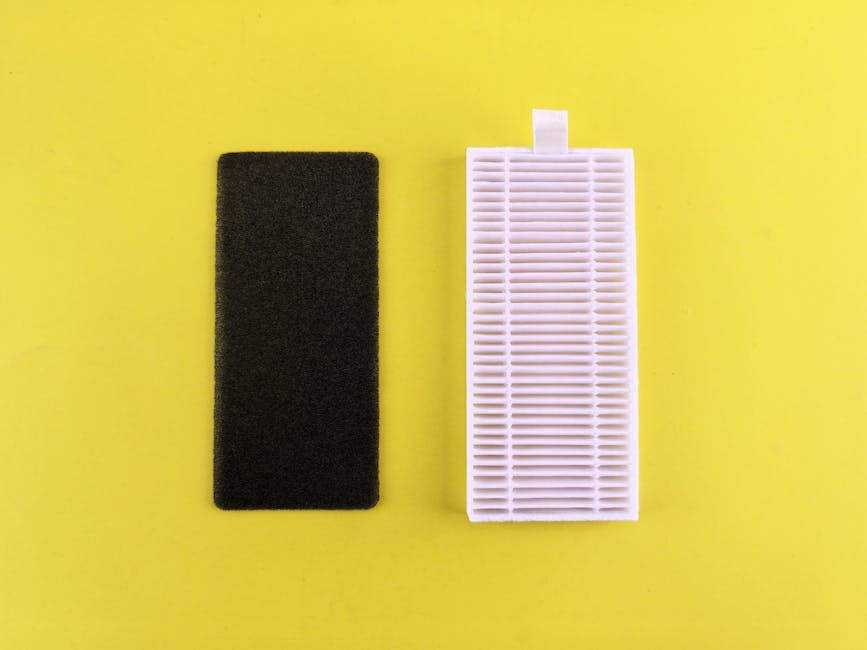
Some high-end units, like those featuring HyperHEPA technology, go even further, removing 99.5% of particles as small as 0.003 microns-that is 10 times smaller than a typical virus! This level of filtration ensures that even the smallest bioaerosols are trapped before you can breathe them in.
Advanced Water Purification Technologies
For those of us who love the outdoors, the best filter for viruses isn’t just a luxury-it is a safety essential. While many hikers believe that “wild” water is pure, it often contains enteric viruses. These are viruses like Norovirus and Rotavirus that are shed in human or animal waste and find their way into streams and lakes.
Unlike bacteria, which are living cells, viruses are tiny strands of genetic material. Because they are so small, standard “microfilters” (usually 0.1 to 0.2 microns) often miss them. More info about waterborne pathogens can help you identify which threats are most common in your area. To truly purify water, you need a system that meets the NSF P231 protocol. This is the gold standard for microbiological purifiers, requiring a 4-log (99.99%) reduction in viruses and a 6-log (99.9999%) reduction in bacteria.
Understanding the risks is the first step. We recommend understanding the dangers of bacteria and protozoa in natural water sources to better appreciate why a simple mesh screen isn’t enough.
The technology that makes virus removal possible in a portable format is called ultrafiltration. These membranes have microscopic pores-often 0.02 microns or smaller. To put that in perspective, a human hair is about 70 microns wide. These pores act as a physical barrier that viruses simply cannot fit through.
Selecting the Best Filter for Viruses in Backcountry Water
When you are miles from the nearest tap, you need a purifier that is both reliable and easy to use. How personal water filtration actually works involves several stages, but for viruses, the “ultrafilter” is the star of the show.
Many modern purifiers use hollow fiber membranes. Imagine thousands of tiny, straw-like tubes bundled together. As water is pushed (or pulled by gravity) through the walls of these tubes, the clean water exits while the pathogens are trapped on the outside.
| Feature | Standard Microfilter | Microbiological Purifier |
|---|---|---|
| Pore Size | 0.1 – 0.2 Microns | 0.01 – 0.02 Microns |
| Bacteria Removal | 99.9999% | 99.9999% |
| Virus Removal | No | 99.99% (4-log) |
| Best For | Clear tap water/Domestic hiking | International travel/Emergency/Backcountry |
For groups or long-term camps, gravity-fed systems are often the best filter for viruses. You can hang a large bag of “dirty” water from a tree and let gravity do the work, providing up to 30 liters of purified water per hour without any pumping. If you are moving fast and light, a pressurized pump or a specialized “purifier straw” is a better fit.
Choosing the Best Filter for Viruses for Home and Trail
At Total Cobre, we spend a lot of time testing gear so you don’t have to. Whether you are looking for a whole-home solution or a way to stay hydrated on a thru-hike, the “best” choice always depends on your specific environment.
For hikers, check out our ultimate guide to portable water filters to see which purifiers currently lead the pack in durability and flow rate.
For your home or office, consider these three categories:
- Portable Air Purifiers: These are ideal for renters or for targeting specific rooms (like a bedroom or a classroom). Look for units with a CADR of at least 250-300 CFM for medium-sized rooms.
- HVAC Upgrades: If you own your home, upgrading to a MERV 13 or higher filter in your central air system is a cost-effective way to filter the whole house. Just be sure to consult a pro to ensure your system’s fan can handle the increased resistance.
- DIY Solutions: During the height of the pandemic, the “Corsi-Rosenthal Box”-a DIY air cleaner made from a box fan and four MERV 13 filters-became a hero. Research shows these DIY units can actually outperform expensive commercial purifiers in terms of raw air-cleaning power for a fraction of the cost.
Maintenance and Frequently Asked Questions
Even the best filter for viruses will fail if it isn’t maintained. Filters are like sponges; eventually, they get full.
For air purifiers, HEPA filters usually need replacing every 6 to 12 months, depending on your air quality. If you live in an area with wildfire smoke or high pollen, you’ll need to swap them more often.
For water purifiers, maintenance is even more critical. Because the pores are so small (0.02 microns), they can clog quickly if the water is silty or “mucky.” This is where “backwashing” comes in. Most high-quality purifiers include a syringe that allows you to force clean water backward through the filter, flushing out the trapped gunk and restoring the flow rate.
Our Maintenance Checklist:
- Air Filters: Vacuum the “pre-filter” (the outer mesh) monthly to extend the life of the HEPA core.
- Water Purifiers: Always backwash after every trip, and never let a wet filter freeze—the expanding ice will destroy the delicate membranes.
- UV Systems: If you use UV as a backup, ensure the glass sleeve is clean. We’ve written about how UV purification systems enhance health, but remember they work best on clear water.
Can air and water filters completely eliminate viral transmission?
No filter is a magic wand. While the best filter for viruses can remove 99.99% of pathogens, they are part of a “layered” defense. In the air, filtration works best when combined with good ventilation (opening windows) and source control (masks). In water, filtration is highly effective, but you must also practice good hygiene—like washing your hands after handling your “dirty” water bag—to avoid cross-contamination.
Do UV light add-ons effectively kill viruses in water?
Yes, UV-C light is very effective at “scrambling” the DNA/RNA of viruses, making them unable to reproduce. However, UV has a major weakness: turbidity. If the water is cloudy, the “shadows” created by dirt particles can protect viruses from the light. This is why many experts prefer mechanical ultrafiltration (the physical barrier) as the primary defense, using UV only as a secondary stage.
How often should you replace a virus-rated filter?
- HVAC Filters: Every 60–90 days.
- Portable HEPA: Every 12 months (or when the indicator light turns on).
- Portable Water Purifiers: These are often rated by liters. A high-capacity purifier might last for 18,000 liters, while a small replacement cartridge might only handle 1,000 liters. A good rule of thumb: if the flow rate drops significantly and backwashing doesn’t help, it’s time for a new one.
Conclusion
Finding the best filter for viruses is about matching the technology to the threat. In your home, that means high-CADR HEPA units and MERV 13 filters that keep the air moving and clean. On the trail, it means stepping up from a standard filter to a certified microbiological purifier that can handle the invisible threats lurking in the water.
Filtration is most effective when it is part of a broader strategy. Keep your filters clean, replace them on schedule, and always prioritize gear that is backed by independent lab testing and certifications like NSF P231 or H13 HEPA.
Ready to gear up for your next adventure? Visit Total Cobre for more outdoor gear reviews and stay safe out there!
