
Clean Water on the Trail: Why a High Capacity Purifier Backpack Matters
A high capacity purifier backpack is the single most important piece of gear for groups or multi-day hikers who can’t afford to gamble on contaminated water sources.
Best high capacity purifier backpacks at a glance (2026):
| System | Capacity | Best For | Removes Viruses? |
|---|---|---|---|
| Platypus GravityWorks | 4L (8L total) | Groups, camp use | No |
| MSR AutoFlow XL | 10L reservoir | Basecamps, large groups | No |
| Katadyn Gravity BeFree | 3L | Lightweight groups | No |
| Platypus QuickDraw 3L | 3L | Versatile group use | No |
| MSR Guardian Purifier | 2L/min pump | Dirty water, virus risk | Yes |
| Sawyer Squeeze + Cnoc 2L | 2L | Solo to small groups | No |
Water filters are gear you simply don’t mess around with. A single contaminated drink from a mountain stream can mean days of illness far from help — and when you’re deep in the backcountry, that’s a serious problem.
Most backpackers focus on weight and packability. But for groups or long expeditions, capacity and purification power matter just as much.
Here’s the core distinction worth understanding before you buy:
- Filters remove bacteria and protozoa (like Giardia and Cryptosporidium)
- Purifiers go further — they also eliminate viruses, which are far smaller and can slip through standard hollow-fiber membranes
For most trails in the US and Canada, a high-quality filter is enough. For international travel or heavily trafficked water sources, you need a true purifier.

Choosing the Right High Capacity Purifier Backpack for Your Adventure
When we head into the wilderness, we aren’t just looking for a drink; we’re looking for a reliable system that won’t fail when the water looks like chocolate milk. Choosing a high capacity purifier backpack involves balancing several technical factors.
Flow Rates and Micron Ratings
The “speed” of your filter is measured in liters per minute (L/min). For a solo hiker, 1 L/min is fine, but for a group of four, you’ll want something pushing 1.75 to 2.5 L/min. This is often dictated by the micron rating. Most standard filters use a 0.1 or 0.2-micron hollow-fiber membrane. These are excellent for stopping bacteria (like E. coli) and protozoa (like Giardia). However, if you need to stop viruses, you need a purifier with a pore size of approximately 0.02 microns.
Weight Constraints and Portability
Every ounce counts when you’re climbing 3,000 feet of granite. We often recommend lightweight water purifiers for backpacking for solo missions. However, for group trips, a slightly heavier gravity system actually saves “work weight” because you aren’t spending an hour hunched over a stream pumping water. You can find more details on balancing these needs in our guide to the best portable water filters for backpackers.
Handling Turbidity
Turbidity is just a fancy word for “cloudiness.” If you’re filtering from glacial silty runoff or muddy wetlands, a standard squeeze filter will clog in seconds. In these “gnarly” conditions, you need a system designed for high-sediment water, such as a pump with a pre-filter or a self-cleaning mechanism.
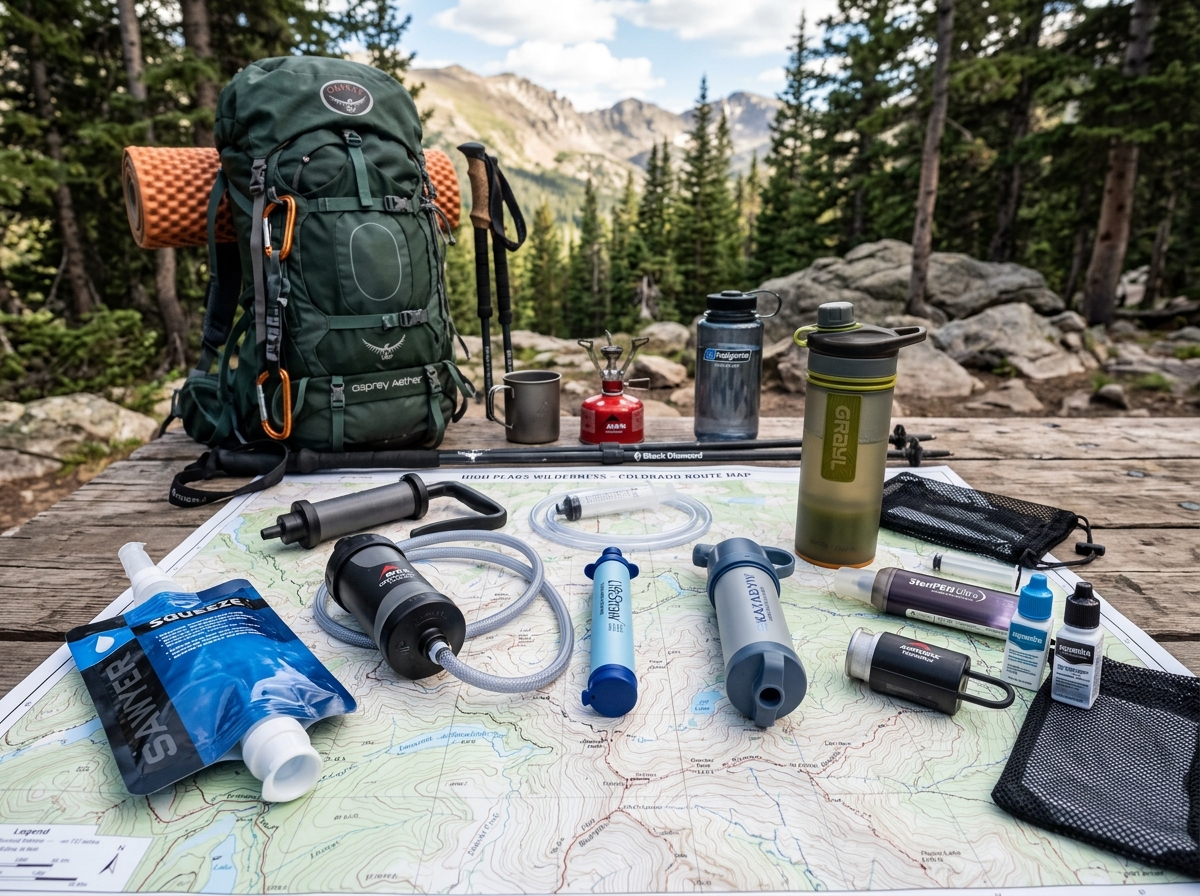
Top-Rated Systems for Large Groups and Basecamps
For 2026, the market has shifted toward high-volume reservoirs that allow you to set up camp and let gravity do the heavy lifting. If you find yourself in a basecamp scenario, you don’t want to be limited by small high-capacity water purification bottles. You need a reservoir that can hydrate the whole crew for dinner and morning coffee in one go.
| Model | Reservoir Capacity | Measured Weight | Flow Rate (Tested) |
|---|---|---|---|
| MSR AutoFlow XL | 10 Liters | 11.5 oz | 1.75 L/min |
| Platypus GravityWorks | 4 Liters | 11.5 oz | 1.5 L/min |
| LifeStraw Peak Gravity | 3 Liters | 8.2 oz | 1.5 L/min |
| Katadyn BeFree Gravity | 3 Liters | 6.8 oz | 2.0 L/min |
Gravity-Fed High Capacity Purifier Backpack Solutions
Gravity systems are the “set it and forget it” heroes of the trail. The Platypus GravityWorks remains a gold standard for us. It typically comes with two 4-liter reservoirs—one for “dirty” water and one for “clean” water. You simply hang the dirty bag on a tree branch, connect the hose, and let the water flow through the hollow-fiber filter into the clean reservoir.
The Katadyn BeFree 3L is a fantastic alternative for those who want to move fast. It features a wide-mouth opening that makes scooping from shallow pools a breeze. While it doesn’t have the 8-liter total capacity of the Platypus, its flow rate is exceptionally fast when the filter is new. For a deeper dive into these systems, check out our ultimate guide to portable water filters for outdoor adventures.
Pump-Action High Capacity Purifier Backpack Models for Viruses
Sometimes gravity isn’t enough. If you are traveling internationally or in areas where human waste contamination is a high risk, you need a purifier. The Guardian Purifier MSR is arguably the most advanced piece of tech in this category.
Originally designed for military squads, the MSR Guardian uses a medical-grade hollow-fiber membrane that physically removes viruses. What makes it a “hydration hero” for us is its self-cleaning technology. With every pump stroke, the system uses 10% of the water to backflush the filter, meaning it won’t clog even in the siltiest Colorado River water. It’s a must-have portable water filter for frequent backpackers who venture into high-risk zones.
Maintenance and Longevity for Extended Trips
A high capacity purifier backpack is an investment, and like any investment, it requires maintenance. On a long thru-hike or a 10-day expedition, your filter’s performance will inevitably drop as it traps debris.
Field Cleaning and Backflushing
Most systems, like the Sawyer Squeeze, require “backflushing”—using a syringe to force clean water backward through the filter to pop out trapped sediment. If you’re using the Sawyer Squeeze with a Cnoc 2L bladder, you can even create a DIY gravity setup that makes this process easier.
Other filters, like the Katadyn BeFree, use a “swish” method. You simply fill the bladder with clean water and shake it vigorously to dislodge particles. While easier, some testers find this less effective than a high-pressure backflush over long-term use. For more tips on bottle-integrated systems, see our backpackers guide to using water bottles with built-in filters.
Freeze Protection: The Silent Killer
This is critical: Never let your hollow-fiber filter freeze. If water is inside the tiny tubes and it turns to ice, it will expand and crack the membrane. You won’t be able to see the cracks, but bacteria and viruses will sail right through them. In cold weather, we sleep with our filters in our sleeping bags to keep them warm.
Industrial vs. Backcountry Capacity
While we focus on trail gear, it’s interesting to note the scale of high-capacity systems in other industries. For instance, the Gardiner Pure Water Backpack V3 is a 22-liter beast used for professional cleaning. While you wouldn’t want to hike the PCT with a 22-liter tank on your back, it illustrates how pump and battery technology can handle massive water volumes. For the backcountry, we stick to the 3L to 10L range to keep our spines intact!
Frequently Asked Questions about High Capacity Filtration
What is the best high-capacity system for extremely silty water?
The MSR Guardian is the undisputed king here. Because it self-cleans with every stroke, it can handle glacial flour and silt that would instantly brick a Sawyer or a BeFree. If you are on a budget, you can “pre-filter” your water by letting it settle in a bucket or Ziploc bag for an hour before filtering the clear water off the top.
How do I protect my purifier from freezing temperatures?
As mentioned, keep it close to your body. If you’re hiking in sub-zero temps, tuck the filter element into an interior jacket pocket. At night, put it in a waterproof bag and keep it at the bottom of your sleeping bag. If you suspect your filter has frozen, it is safer to replace the cartridge than to risk a parasite.
Do I need a purifier that removes viruses for domestic backpacking?
In most of the US and Canada, the answer is usually no. Most backcountry waterborne illnesses are caused by Giardia or Cryptosporidium, which are large enough to be caught by standard filters. However, if you are hiking in areas with poor human waste management or traveling to developing nations, a purifier is a non-negotiable safety item.
Conclusion
At Total Cobre, we believe that having the right gear is the difference between a legendary trip and a medical emergency. Whether you choose the massive 10-liter capacity of an MSR AutoFlow for your troop or the indestructible virus protection of the MSR Guardian, your high capacity purifier backpack is your most loyal companion on the trail.
Safe trail hydration starts with expert testing and choosing the right tool for the terrain. Don’t wait until you’re staring at a muddy puddle in the middle of a desert to think about your filtration strategy. Explore our full range of outdoor gear guides to ensure you’re prepared for whatever 2026 throws your way. Happy trails, and stay hydrated!
