
Don’t Drink That Water: What Every Hiker Needs to Know Before Hitting the Trail
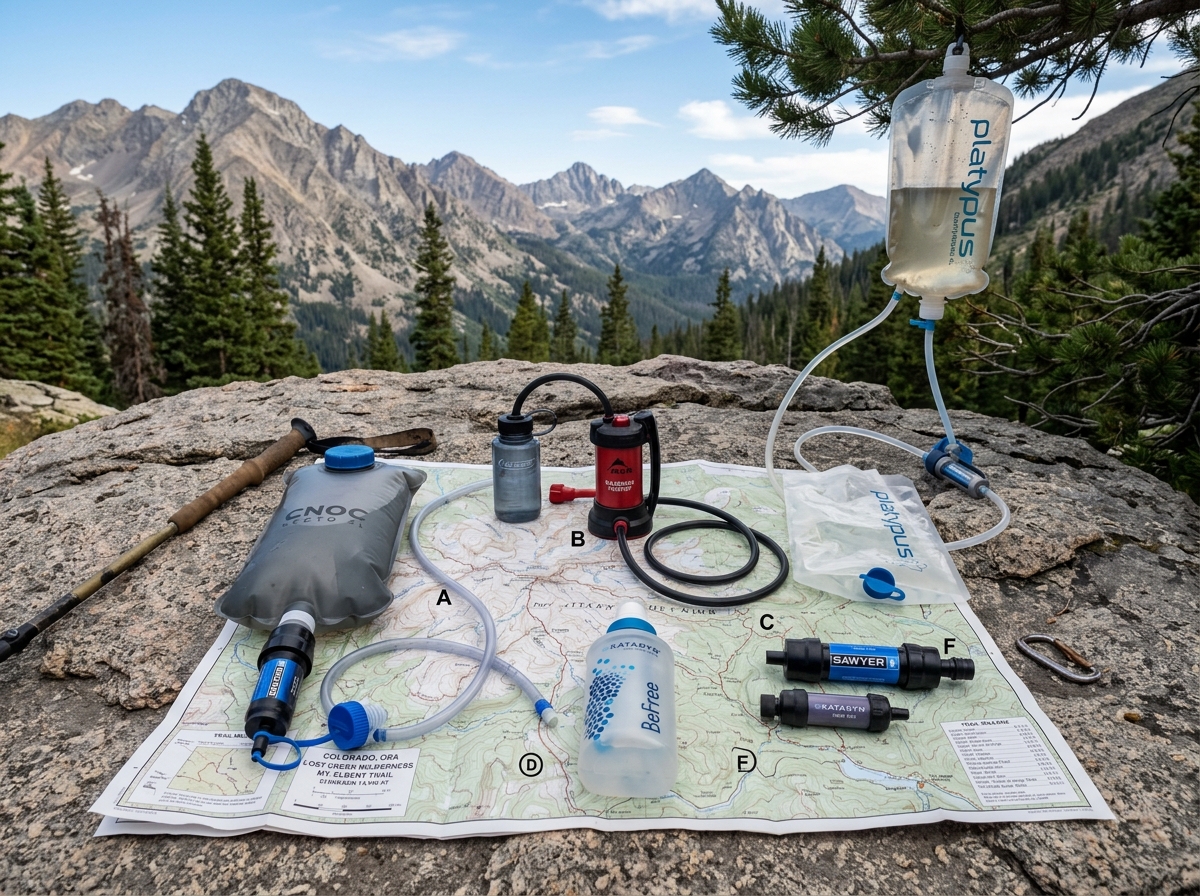
Choosing the right backpackers water filter could be the single most important gear decision you make before a multi-day hike. Here are the top options to consider:
Top Backpacking Water Filters at a Glance:
| Filter | Best For | Weight | Flow Rate | Lifetime |
|---|---|---|---|---|
| Sawyer Squeeze | Best overall | 3 oz | 1.7 L/min | 378,000 L |
| Katadyn BeFree | Clear water sources | 2.3 oz | 2 L/min | 1,000 L |
| Platypus GravityWorks | Groups | 11.5 oz | 1.75 L/min | 1,500 L |
| MSR Guardian | Virus protection | 1 lb 1.3 oz | 2.5 L/min | 10,000 L |
| LifeStraw Peak Straw | Ultralight/solo | 2.3 oz | 1.5 L/min | 4,000 L |
| Katadyn Micropur Tabs | Backup/chemical | 0.9 oz | N/A | 30 L/pack |
That stream looks crystal clear. But looks are deceiving.
Backcountry water — even from fast-moving mountain streams — can carry Giardia, Cryptosporidium, harmful bacteria, and in some areas, viruses. These pathogens are invisible to the naked eye. And getting sick in the wilderness, miles from help, is a genuinely dangerous situation.
The good news: a quality water filter weighing just 2-3 ounces can protect you completely. The tricky part is knowing which one to pick — and using it correctly.
This guide cuts through the noise so you can choose with confidence and drink safely on every trip.
Understanding the Different Types of Backpackers Water Filter
When we head into the backcountry, we aren’t just looking for a way to make water taste better; we are looking for a mechanical or chemical barrier against pathogens. The world of water treatment has evolved significantly over the last decade, moving from heavy, clunky pumps to sleek, ultralight “hollow fiber” membranes.
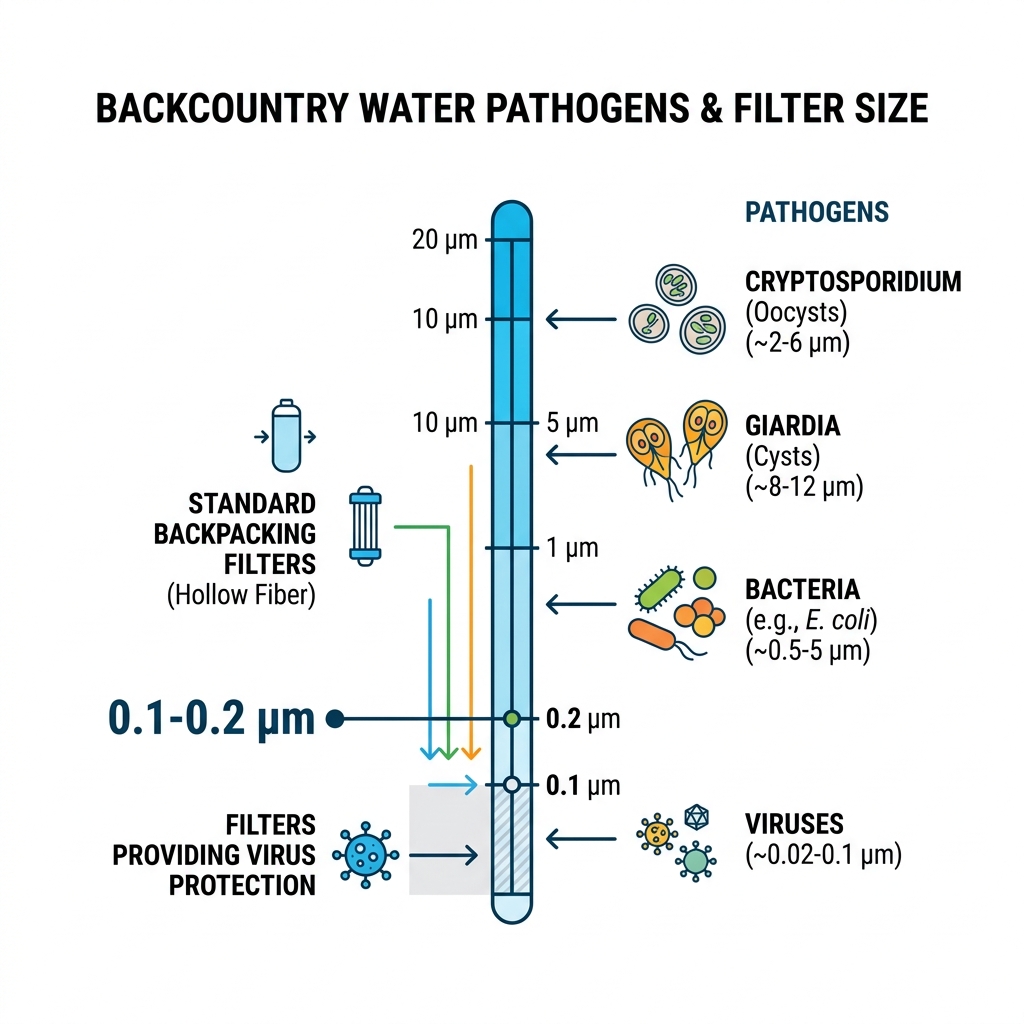
To find the Best Portable Water Filters for Backpackers, you first need to understand how these technologies differ. Most modern filters use hollow fiber membranes—essentially tiny “straws” with microscopic holes (usually 0.1 to 0.2 microns). These holes are small enough to let water through but trap bacteria and protozoa.
Other methods include UV purification, which uses ultraviolet light to scramble the DNA of microbes so they can’t reproduce, and chemical drops like chlorine dioxide, which kill pathogens over a set period of time.
Squeeze Filters: The Most Popular Backpackers Water Filter
For the modern ultralight hiker, the squeeze filter is the gold standard. These systems consist of a hollow-fiber filter that screws onto a collapsible pouch or a standard plastic water bottle (like a Smartwater bottle). You simply fill the bag with “dirty” water and squeeze it through the filter into your clean container or directly into your mouth.
The Sawyer Squeeze is perhaps the most famous example, boasting an incredible lifetime volume of 378,000 liters. It’s been used for over 8,000 miles of thru-hikes on the PCT and CDT, proving its durability. Another top contender is the Katadyn BeFree, which is loved for its fast 2 L/min flow rate and easy cleaning—you just “swish” it in the water to clear debris.
For those looking for a versatile kit, the LifeStraw Peak Series All in One Filter offers a modular design that can work as a straw, a squeeze, or even a gravity system. If you want a deeper dive into these options, check out our Ultimate Guide to Portable Water Filters for Outdoor Adventures.
Gravity Systems: The Best Backpackers Water Filter for Groups
If you’ve ever spent an hour hunched over a stream pumping water for four people, you’ll understand why we love gravity systems. These are “set it and forget it” solutions. You fill a large reservoir with dirty water, hang it from a tree, and let gravity pull the water through a filter into a clean bag or bottle.
The Platypus GravityWorks is a favorite for basecamps and families. It can filter 4 liters of water in about 2.5 minutes without a single stroke of a pump. Similarly, the MSR AutoFlow XL offers a massive 10L capacity, making it perfect for large groups. These systems are highly efficient but generally weigh more than solo squeeze setups, usually landing around 10–12 ounces.
Water Filter vs. Purifier: Which Do You Need?
This is a critical distinction that many hikers miss. A water filter removes bacteria (like E. coli and Salmonella) and protozoa (like Giardia and Cryptosporidium). However, most filters cannot remove viruses because viruses are about 10 times smaller than bacteria.
A water purifier is designed to handle all three: bacteria, protozoa, and viruses. Purifiers usually have a much smaller pore size—around 0.02 microns—or use UV light or chemicals to neutralize viral threats. To learn more about the lightest options in this category, see our guide on Lightweight Water Purifiers for Backpacking.
When to Choose a Purifier Over a Filter
In most of the U.S. and Canada, a standard filter is sufficient because viruses aren’t a common waterborne threat in those backcountry areas. However, you should opt for a purifier if:
- You are traveling internationally to developing nations.
- You are in an area with high human or animal waste contamination.
- You are hiking in a heavily trafficked “high-impact” zone where norovirus might be a risk.
The MSR Guardian is the heavyweight champion here. Originally designed for military use, it features a self-cleaning pump that removes viruses and handles the most “turbid” (murky) water imaginable. Another great option is the Grayl GeoPress, which works like a French press—you just push down, and in eight seconds, you have purified water.
The Role of Chemical Backups
We always recommend carrying a secondary treatment method. Mechanical filters can break, freeze, or clog. Chemical treatments like Aquamira (chlorine dioxide) or Katadyn Micropur tablets are the perfect backup.
Unlike old-school iodine, chlorine dioxide doesn’t leave a nasty aftertaste and is effective against viruses and Cryptosporidium (though the latter requires a 4-hour wait time). For a breakdown of which tablets are worth the weight, read our Comparison of Water Purification Tablets for Backpackers.
Critical Factors When Choosing Your Backpackers Water Filter
Choosing a filter isn’t just about the price tag. We evaluate gear based on what we call the “Big Three”: weight, flow rate, and longevity.
Flow Rate and Real-World Performance
On paper, a filter might claim to process 2 liters per minute. In the real world, after 50 liters of silty water, that flow rate often drops. This is where maintenance becomes key. If you prefer a traditional hand pump, the MSR MiniWorks EX Microfilter is a classic choice. It’s slower (about 1L per minute), but the ceramic element can be scrubbed clean in the field to restore flow.
Our team has tested these filters across 100,000 miles of terrain. We’ve found that while the Sawyer Mini is the lightest at 2 oz, it tends to clog much faster than the full-sized Sawyer Squeeze (3 oz). That extra ounce is almost always worth it for the improved flow rate. For more tips on making the right choice, see How to Choose the Best Portable Water Filter for Your Hiking Needs.
Durability and Maintenance Requirements
A filter is only good if it works. Squeeze filters are incredibly durable because they have no moving parts, but they require “backflushing” with a syringe to clear out trapped sediment. If you neglect this, your 1-minute fill-up will eventually take 10 minutes.
Pump filters, like the Katadyn Hiker Pro, have more moving parts (O-rings and handles) that may require occasional lubrication with silicone grease. Knowing How to Effectively Use a Portable Water Filter on Your Next Trail Adventure includes mastering these small maintenance tasks before you leave your kitchen.
Maintenance and Field Care to Prevent Failure
The most common way a backpackers water filter fails isn’t from “wearing out”—it’s from freezing. Most filters use hollow fiber membranes that contain water. If that water freezes, it expands and cracks the microscopic fibers. The filter will still look fine and water will still flow, but it will no longer be removing pathogens.
Pro Tip: If the temperature is going to drop below freezing, keep your filter in a sealed Ziploc bag and sleep with it inside your sleeping bag. During the day, keep it in an internal jacket pocket close to your body heat. For more safety tips, visit our guide on Safe Hydration Practices Every Backpacker Should Adopt.
Handling Murky and Silty Water Sources
If you have to pull water from a stagnant pond or a silty glacial stream, your filter is going to struggle. To extend its life, use a pre-filter. A simple bandana or even a piece of pantyhose over the intake can catch the “big stuff” like sand and algae before it reaches your expensive filter element.
In extremely silty conditions, you can use “flocculation” (letting the water sit in a bag so the sediment settles at the bottom) before filtering the clear water off the top. This is a vital skill when Purifying Water in Remote Areas: Strategies for Backpackers.
Avoiding Cross-Contamination Mistakes
The best filter in the world won’t help if you touch the “clean” end of the filter with “dirty” hands. We’ve seen many hikers get sick not because the filter failed, but because they touched a contaminated lake, then touched their water bottle’s mouthpiece.
Always use hand sanitizer after handling your dirty water bags and before drinking. Also, be mindful of where you “do your business.” Following Leave No Trace principles—digging a cathole 6-8 inches deep and at least 200 feet from water—is essential for keeping our shared water sources safe. Learn more about Preventing Cross-Contamination in Water Filters: Best Practices.
Frequently Asked Questions about Backpackers Water Filters
How do I prevent my water filter from freezing?
As mentioned, the only reliable way is to keep it warm. If you suspect your filter has frozen, do not trust it. Most manufacturers recommend replacing the filter element if it has been exposed to sub-freezing temperatures while wet.
How often should I backflush my filter?
We recommend backflushing your squeeze filter at the end of every trip, or every few days during a long thru-hike. If you notice the flow rate slowing down, that’s your signal to break out the syringe.
Can a water filter remove heavy metals or chemicals?
Most standard hollow-fiber filters do not remove chemicals or heavy metals. For that, you need a filter with an activated carbon core, like the MSR MiniWorks or the LifeStraw Peak Series, which can reduce lead, herbicides, and pesticides. However, even these are not designed for water near mining tailing ponds or industrial runoff.
Conclusion
At Total Cobre, we believe that gear longevity and safe hydration are the foundations of a great adventure. Whether you choose the ultralight Sawyer Squeeze for a solo mission or the robust MSR Guardian for international travel, the key is understanding your equipment and maintaining it properly.
Don’t let a microscopic parasite turn your dream hike into a nightmare. Invest in a quality backpackers water filter, carry a backup, and always treat your water with the respect it deserves.
For more deep dives into outdoor gear and survival strategies, explore our Ultimate Guide to Portable Water Filters for Outdoor Adventures or Explore more at Total Cobre. Happy trails!
