
The Best Water Filters for the Money: Top Picks at a Glance
The best water filter for the money balances upfront cost, long-term operating costs, and how well it removes harmful contaminants like lead, PFAS, and heavy metals.
Here are the top value picks:
| Filter Type | Best For | Est. Annual Cost |
|---|---|---|
| Pur Plus 11-Cup Pitcher | Most people, no install needed | ~$108/yr (40 gal/mo) |
| Amazon Basics 10-Cup Pitcher | Budget buyers | ~$44/yr (40 gal/mo) |
| APEC ROES-50 Under-Sink RO | High-volume households | ~$75/yr |
| Travel Berkey Gravity Filter | Large families, long-term savings | ~$41/yr (even at 160 gal/mo) |
| Waterdrop WD-10UA Under-Sink | Lowest annual cost overall | ~$33/yr |
Clean water matters whether you’re at home or deep in the backcountry. But with dozens of filters on the market, it’s easy to overspend — or worse, underspend on something that doesn’t actually protect you.
The price tag on the box rarely tells the full story. A cheap pitcher might cost $20 upfront but drain your wallet with $960 a year in replacement filters. A pricier under-sink system might pay for itself in months.
The real question isn’t “what’s the cheapest filter?” — it’s “what gives me the cleanest water for the least money over time?”
That’s exactly what this guide breaks down.
Defining the Best Water Filter for the Money: Value vs. Price
When we talk about the best water filter for the money, we aren’t just looking at the sticker price at the checkout counter. True value is a calculation of performance divided by total cost of ownership. To find the best ROI, we have to look at several critical factors:
- Contaminant Removal Effectiveness: Does it actually remove the “nasty stuff”? We prioritize filters that tackle heavy metals like lead, arsenic, and uranium, as well as “forever chemicals” like PFAS.
- Upfront vs. Operating Costs: A $20 pitcher is a great deal until you realize the filters need replacing every two weeks. Conversely, a $300 system with filters that last four years is often the smarter financial move.
- Filter Lifespan: Some filters are rated for 40 gallons, while others can handle 6,000 gallons. This drastically changes how many times you’ll be reaching for your wallet each year.
- Wastewater Generation: Particularly with Reverse Osmosis (RO) systems, some units waste 3 to 5 gallons for every 1 gallon of clean water produced. This “hidden cost” shows up on your water bill.
To ensure you’re getting a system that actually protects your health, we recommend checking the EWG Tap Water Database | Water Filters to see what’s in your local pipes. Look for certifications like NSF/ANSI 53, which specifically verifies that a filter can reduce contaminants with known health effects, such as lead and PFAS.
Annual Operating Cost Comparison (Based on Lab Data)
| Model | Cost at 40 gal/mo | Cost at 160 gal/mo | Key Strength |
|---|---|---|---|
| Waterdrop WD-10UA | $33 | $33 | Ultra-low maintenance |
| Travel Berkey | $41 | $41 | Massive capacity, long life |
| Amazon Basics Pitcher | $44 | $176 | Best entry-level price |
| APEC ROES-50 | $75 | $75 | Professional-grade purity |
| Pur Plus 11-Cup | $108 | $432 | Near-RO performance in a pitcher |
| Culligan ZeroWater | $240 | $960 | Total Dissolved Solids (TDS) removal |
Top-Rated Pitchers and Gravity Systems for Long-Term Savings
Pitchers are the go-to for many because they require zero installation. However, the performance gap between brands is wider than you might think.
The Amazon Basics 10-Cup Pitcher is a surprising contender for the best water filter for the money. While it’s a budget-friendly option, lab tests show it removes about 97% of lead. One of its “secret” value features is that it is compatible with multiple filter brands, allowing you to shop around for the cheapest replacement cartridges. At a standard usage of 40 gallons per month, you’re looking at a very manageable $44 annual operating cost.
If you’re willing to spend a bit more for higher performance, the Pur Plus 11-Cup Pitcher is a powerhouse. In independent lab testing, it removed 100% of lead, arsenic, and uranium, and 97% of PFAS. It delivers “nearly RO-level” filtration without the plumbing. While the annual cost is higher (~$108), the peace of mind regarding critical contaminants is significant.
Why Gravity Systems are the Best Water Filter for the Money for Large Families
For households that go through a lot of water, a gravity-fed system like the Travel Berkey is often the champion of ROI. It features a 1.5-gallon stainless steel reservoir and uses powerful carbon elements that can last up to 4 years.
Even if your family uses a high volume of water (160 gallons per month), the annual operating cost remains a staggering $41. Compare that to a ZeroWater pitcher, which could cost you nearly $1,000 a year at that same volume! While the upfront investment is higher, the Berkey pays for itself quickly.
Pro Tip: To get the most out of these filters, we recommend scrubbing the elements every six months to remove surface buildup and maintain a steady flow rate.
High-Volume Efficiency: Under-Sink and Reverse Osmosis Systems
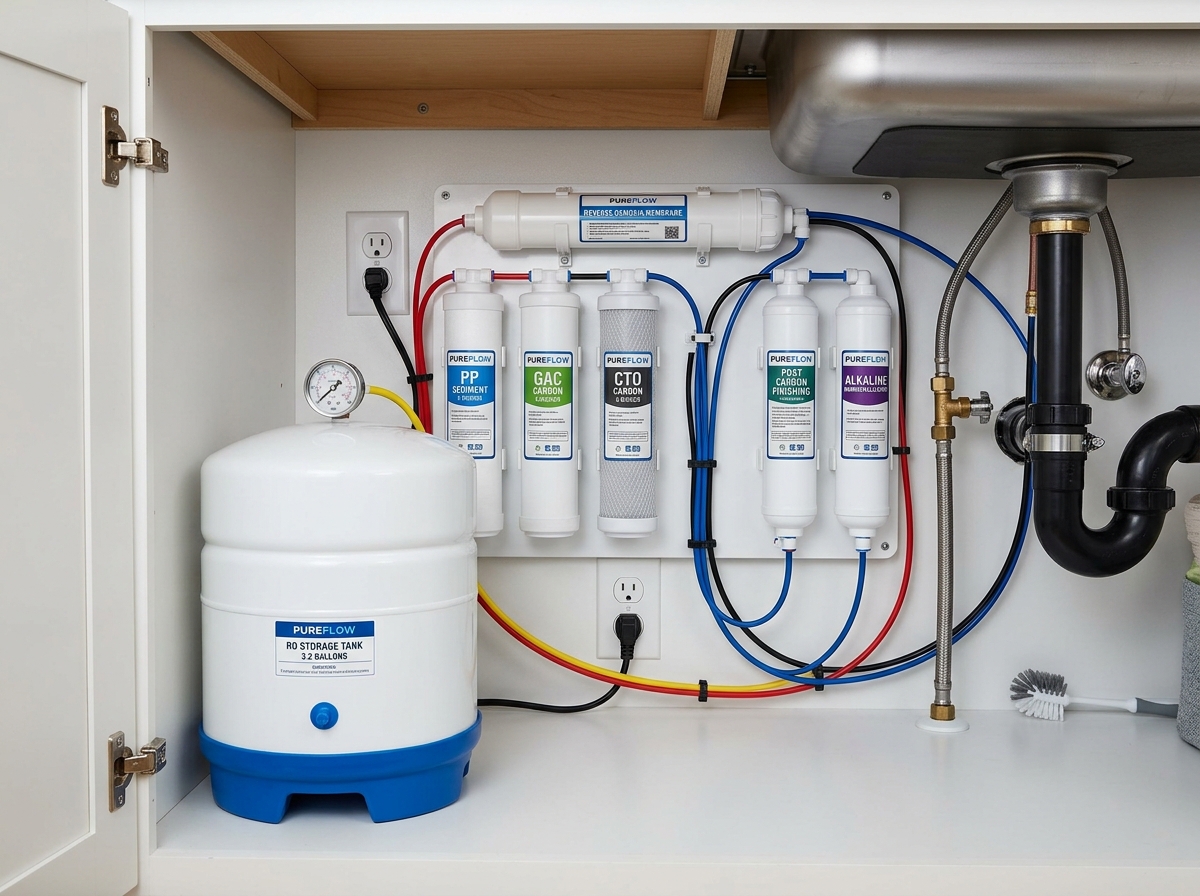
If you own your home or have a landlord who doesn’t mind a little plumbing, under-sink systems provide the ultimate convenience: unlimited filtered water directly from the tap.
The APEC ROES-50 Essence Series is widely considered the most affordable high-performance reverse osmosis system. It brings critical contaminants down to undetectable levels. Its annual filter replacement cost is roughly $75, regardless of how much water you use. The main trade-off is the wastewater ratio; it typically generates about 3 gallons of wastewater for every 1 gallon of purified water.
For those with limited cabinet space, the Waterdrop G3P600 offers a modern tankless design. It’s much more efficient, producing only about 1/2 gallon of waste per gallon of clean water. While the upfront cost is higher, the “twist and pull” filter changes make maintenance a breeze compared to traditional multi-stage housings.
Comparing RO Performance and Hidden Maintenance Costs
Reverse Osmosis is the “gold standard” for removing arsenic, uranium, and nitrates, but it does require more attention than a pitcher. You’ll need to account for:
- Membrane Replacement: Usually every 2 years.
- TDS Removal: RO systems remove almost all minerals, which can make water taste “flat” to some.
- Installation: You may need to drill a hole in your sink for a dedicated faucet.
If you want the under-sink benefits without the RO complexity, the Waterdrop WD-10UA is a fantastic value. It has the lowest estimated annual operating cost we’ve seen at just $33. It doesn’t remove as many dissolved solids as an RO system, but for basic chlorine and taste improvement, it’s unbeatable for the price.
Specialized Solutions for Renters and Adventurers
Not everyone can—or wants to—install a permanent system. For renters, a faucet-mounted filter like the Pur Plus Vertical Faucet Mount offers instant filtered water with a simple, no-drill installation. It’s a great middle ground for those who find pitchers too slow but aren’t ready for under-sink plumbing.
For those of us at Total Cobre who spend our weekends on the trails, value looks a little different. When you’re miles from the nearest tap, the “best value” is a filter that won’t break and won’t make you sick. We’ve found that top-rated portable water filters for budget-conscious adventurers often pay for themselves by eliminating the need to carry heavy loads of bottled water.
If you’re looking for the absolute “best bang for the buck” in the wilderness, Aquamira Water Treatment Drops are a lightweight, inexpensive solution that effectively treats bacteria and viruses. You can learn more about how these compare to mechanical filters in our best-portable-water-filters-for-hiking guide.
Choosing the Best Water Filter for the Money for Portable Use
When selecting a filter for backpacking or emergency kits, consider these three metrics:
- Weight: Every ounce counts when it’s on your back.
- Field Maintenance: Can you clean it if it clogs? Filters like the Sawyer Squeeze offer a “lifetime guarantee” because they can be backflushed indefinitely.
- Pore Size: For most hiking in the US, a 0.1-micron filter is sufficient to remove bacteria and protozoa. If you’re traveling internationally, you may need a “purifier” that handles viruses.
For more detailed breakdowns, check out our water-filters-for-camping-reviews-guide or our list of top-rated-portable-water-filters-under-50.
Frequently Asked Questions about Water Filter Value
What are the hidden costs of budget water filters?
The biggest hidden cost is replacement frequency. A budget pitcher might cost $15, but if the filters only last 20 gallons and cost $10 each, you’ll spend hundreds of dollars a year. Another hidden cost is wastewater; some RO systems can significantly increase your monthly water bill if they have poor efficiency ratios. Finally, consider maintenance time—if a system requires two hours of priming and scrubbing every month, your time has a value too!
Do cheap water filters remove PFAS and lead?
It depends on the technology, not just the price. Some budget-friendly options, like the Amazon Basics Pitcher, have been lab-tested to remove 97% of lead. However, many basic carbon filters (like the standard Brita) struggle with PFAS, often only removing 50-70%. Always look for the NSF/ANSI 53 seal to ensure the filter is actually rated for health-related contaminants.
How do I calculate the true annual operating cost?
To find your real cost, follow this formula:
- Determine your monthly usage (Average is 40 gal/month for a couple, 160 gal/month for a large family).
- Check the filter’s rated lifespan (e.g., 40 gallons).
- Divide your monthly usage by the lifespan to see how many filters you need per month.
- Multiply that by the price of a replacement cartridge and then by 12 months.
- Add any annual maintenance kits or electricity costs (for UV systems).
Conclusion
Finding the best water filter for the money doesn’t have to be a chore. Whether you’re looking for the professional-grade purity of an APEC RO system, the long-term savings of a Travel Berkey, or a portable solution for your next summit, the key is looking past the initial price tag.
At Total Cobre, we specialize in helping adventurous hikers and health-conscious families find clean water solutions that actually work without breaking the bank. Don’t settle for “good enough” when it comes to your hydration.
Ready to find your perfect match? More info about our services is just a click away to help you gear up for your next adventure—or just your next glass of water.
