
How Solar Energy Enhances Gravity Filtration
The magic of a solar gravity water filter lies in the synergy between two of nature’s most reliable forces: the sun and gravity. While a traditional gravity filter relies solely on the weight of water to push it through a ceramic or hollow-fiber membrane, adding solar power takes the system to an entirely different level of efficiency and safety.
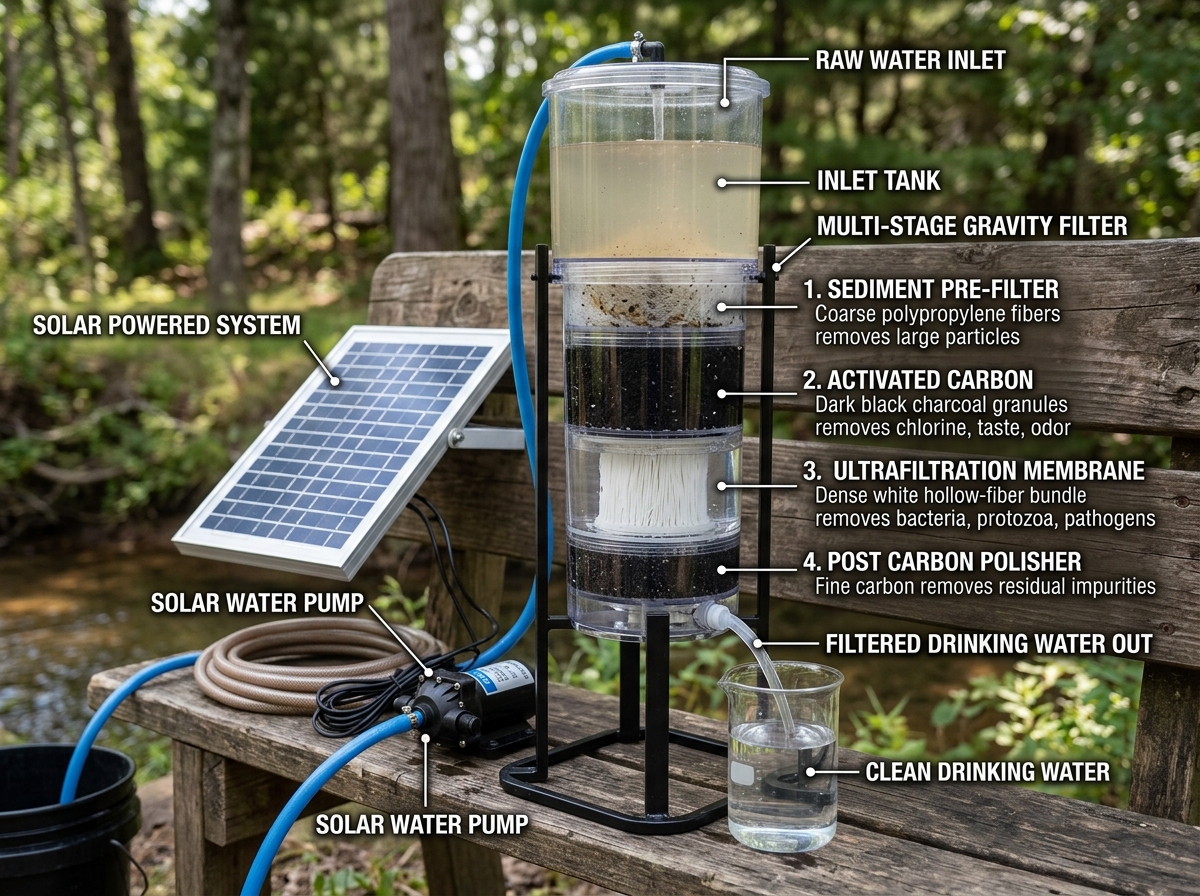
In these hybrid systems, solar panels capture photons and convert them into DC electricity. This power typically runs a low-wattage pump. Instead of you manually hauling buckets of water to a high point to create pressure, the solar pump automates the process. It moves raw water from a source—like a stream, lake, or even a brackish pond—into the filtration housing. From there, gravity or solar-enhanced pressure drives the water through a multi-stage purification sequence.
One of the most advanced versions of this technology is the five-step filtration process used in large-scale community units. This journey usually begins with pre-filtration to catch large sediment, followed by ultrafiltration to remove microscopic pathogens. The water then passes through activated carbon to strip out chemicals and improve taste, followed by a polishing filter. Some systems even include a final stage where a tiny amount of chloramine is injected to keep the water safe during storage.
For those interested in the environmental impact, eco-friendly portable water filtration gear shows how these systems eliminate the need for disposable plastic bottles and chemical tablets that can harm local ecosystems. Furthermore, scientific research on solar-powered desalination has proven that we can now use these same principles to turn seawater into fresh water using nothing but the sun and the natural pressure of elevation.
The Core Components of a Solar Gravity Water Filter
To understand how these work on the trail or at a base camp, we have to look at the “guts” of the system. A standard solar gravity water filter setup includes:
- Photovoltaic (PV) Panels: These are the “engine.” They convert sunlight into DC electricity. Modern panels are incredibly efficient, often capable of powering a pump even when the sun isn’t at its peak.
- The Pump Automation: This component reduces human labor. In systems like the Solar Pure, the pump operates at power levels as low as 200 watts. It ensures a steady flow of water into the filtration membranes without requiring a massive battery bank.
- Sediment Removal: This is the first line of defense. Usually a 10-micron pre-filter, it catches the “big stuff” like sand, silt, and organic debris that would otherwise clog the finer membranes.
- Activated Carbon and Membranes: This is where the purification happens. Activated carbon (often derived from coconut shells) is 20 times more powerful than standard jug filters at removing chlorine and VOCs. Meanwhile, the membranes block bacteria and protozoa.
Choosing the Best Solar Gravity Water Filter for Your Needs
When we’re out on the trail, we don’t just want water that looks clear; we want water that is biologically safe. Choosing the right solar gravity water filter depends on your specific scenario. Are you hiking solo, or are you responsible for a group of twelve at a base camp?
The first thing we look at is the micron rating. For a filter to be truly effective against bacteria like E. coli and protozoa like Giardia, it needs an absolute pore size of 0.2 microns or smaller. Some high-end systems, like those from Sawyer, offer a 0.1-micron absolute rating, ensuring that no pore in the filter is larger than that size. This is a crucial distinction—”nominal” ratings allow some larger particles through, but “absolute” means total blockage.
For those in high-risk areas, a system with UVC sterilization is a game-changer. While standard filters block bacteria, viruses are often small enough to slip through. A solar-powered UVC lamp targets the DNA of viruses, rendering them harmless. Some systems even feature auto-fill functions, where a solar-powered sensor detects when the water level is low and triggers the pump to refill the reservoir. If you’re looking for technical details on how to set these up, you can check out the product manual for survival systems to see the plumbing and wiring involved.
Performance of the Solar Gravity Water Filter in Low Light
A common concern we hear is: “What happens when the sun goes away?” It’s a fair question. Fortunately, modern solar gravity water filter technology is designed for “thick sunshine” and “thin air” alike.
Most high-quality solar pumps have a low threshold of roughly 200 watts. This means that even on a hazy or cloudy day, the panels can still generate enough juice to keep the water moving, albeit at a slower rate. For emergency scenarios, many systems include a rechargeable battery backup or a USB port. This allows you to store energy during the peak of the day to run the UVC lamp or the pump after sunset.
Energy efficiency is the name of the game here. By using gravity to assist the flow, the solar energy required is minimal compared to high-pressure systems like reverse osmosis. This makes solar gravity filters the most reliable choice for long-term off-grid living.
Economic and Operational Benefits of Solar Filtration
If you’re looking at the long-term costs, a solar gravity water filter is almost unbeatable. While the upfront cost might be higher than a simple squeeze filter, the cost per liter is staggeringly low.
For example, the Solar Pure system operates at a cost of approximately $0.005 per liter. When you compare that to the price of buying bottled water or the fuel required to boil water, the savings add up fast. In terms of capacity, these systems are powerhouses. A single community-sized solar unit can produce up to 20,000 liters in a 12-hour day. Even smaller, survival-focused units can produce 1 gallon per hour in distiller mode or 6 gallons per hour in gravity mode.
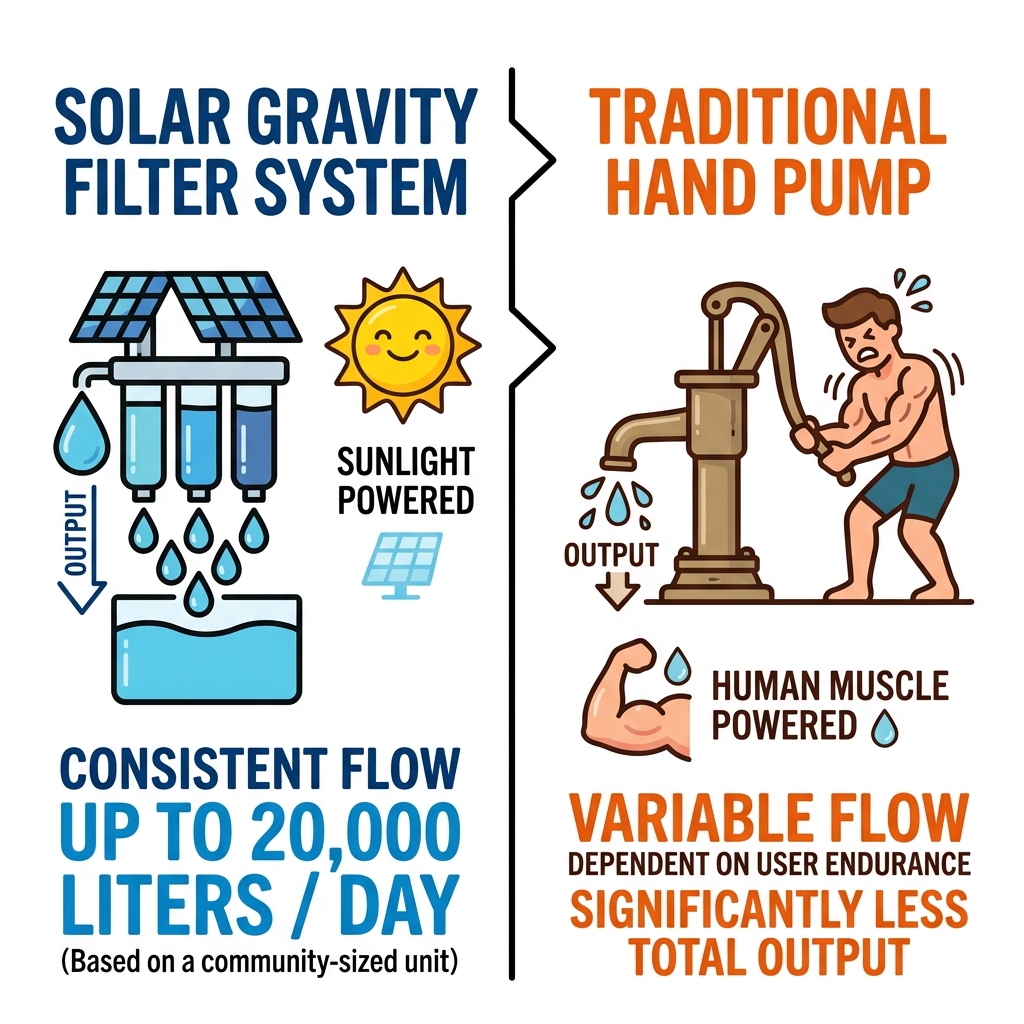
To put this in perspective, let’s look at how solar gravity stacks up against other methods:
| Feature | Solar Gravity Filter | Reverse Osmosis (RO) | Traditional Hand Pump |
|---|---|---|---|
| Power Source | Sun / Gravity | High-pressure Electricity | Human Muscle |
| Operating Cost | ~$0.005 / Liter | High (Filter + Power) | Low (Labor) |
| Daily Capacity | Up to 20,000 Liters | High (but wastes water) | Low (Limited by fatigue) |
| Maintenance | Backwashing / Solar Care | Frequent Membrane Swap | Mechanical Repairs |
| Portability | High to Moderate | Very Low | High |
For those planning group trips, we recommend reading our guide to group camping water solutions, which highlights why gravity-fed systems are superior when you have multiple thirsty hikers to account for.
Real-World Applications and Maintenance Requirements
The beauty of the solar gravity water filter is its versatility. We see these systems deployed in refugee camps and disaster relief zones where the power grid has been destroyed. In these environments, the ability to produce sterile, virus-free water without needing a diesel generator saves lives.
However, even the best gear needs a little love. Maintenance is the key to longevity.
- Filter Backwashing: This is the most frequent task. When you notice the flow rate slowing down, it’s usually because sediment has built up on the membrane. Using a cleaning plunger to force clean water backward through the filter (backwashing) can restore the flow in minutes. A single 0.2-micron ceramic filter can last for over 1,000 gallons if properly maintained.
- Battery Care: If your system uses a battery for UVC or pump backup, keep it charged. Lead-acid or lithium batteries shouldn’t be left completely drained for long periods.
- Freezing Protection: This is a big one for us hikers. If water freezes inside a ceramic or hollow-fiber filter, it will expand and crack the internal structure, rendering the filter useless. In freezing weather, we always keep our filters in an inside jacket pocket to use our body heat.
If you are sourcing your water from particularly silty or “chunky” rivers, it’s worth learning safe methods for river water filtration to prevent premature clogging of your high-end solar gear.
Frequently Asked Questions about Solar Water Purification
Can these systems filter seawater?
Most standard gravity filters cannot remove salt. However, solar gravity water filter systems that include a distillation mode (like the Gravi-Stil) can effectively desalinate seawater. In distiller mode, the sun (or another heat source) evaporates the water, leaving salt and heavy metals behind, and the steam is then condensed back into pure, sterile water.
How much water can a solar gravity filter produce daily?
It varies by size. A portable survival unit might produce 24 to 140 gallons per day, depending on whether it’s in distiller or gravity mode. Large-scale community systems are designed to produce up to 20,000 liters (5,283 gallons) in a 12-hour period of sunlight.
Do solar filters work on cloudy days?
Yes! Most high-efficiency solar pumps are designed to operate at power levels as low as 200 watts. While the production rate might drop during heavy overcast, the system will continue to filter water as long as there is some ambient light hitting the panels.
Conclusion
At Total Cobre, we believe that sustainable hydration is the foundation of any successful adventure or off-grid lifestyle. The solar gravity water filter represents the pinnacle of this philosophy—using renewable energy and natural physics to provide the most essential resource on earth.
From the rugged trails of the backcountry to emergency survival kits, these systems offer a level of reliability that manual pumps and chemical drops simply can’t match. As technology continues to improve, we expect to see even more innovations, like integrated “nano-adsorption” and smarter battery management, making clean water more accessible than ever before.
If you’re ready to gear up for your next trek, don’t miss our breakdown of the top solar-powered water purification solutions for the trail. Stay hydrated, stay safe, and we’ll see you out there!
