
Why Your Water Bottle Must Be BPA and BPS Free
When we talk about a BPA free filter bottle, we aren’t just following a marketing trend; we are talking about fundamental toxicology. For decades, Bisphenol A (BPA) was the “secret sauce” in plastic manufacturing, used to make polycarbonate plastics clear and tough. However, research eventually caught up with the chemistry, revealing that these bottles were doing more than just holding water—they were leaching chemicals into it.
Understanding Bisphenol Compounds
BPA and its cousin BPS (Bisphenol S) are known as endocrine disruptors. In simple terms, these chemicals mimic the hormone estrogen in your body. When you drink from a bottle that isn’t certified as BPA-free, especially if it has been sitting in the hot sun on a trailhead, these chemicals can migrate from the plastic into your water.
This “hormonal mimicry” has been linked to various health concerns, including reproductive issues, metabolic disorders, and an increased risk of certain diseases. Some manufacturers swapped BPA for BPS, thinking they had solved the problem, but BPS has shown similar “estrogenic and androgenic activity.” This is why we always look for bottles that explicitly state they are both BPA and BPS-free. High-quality options like the LifeStraw Go Series – BPA Free Water Bottle with Filter use materials specifically tested to ensure no such chemical leaching occurs, even under stress.
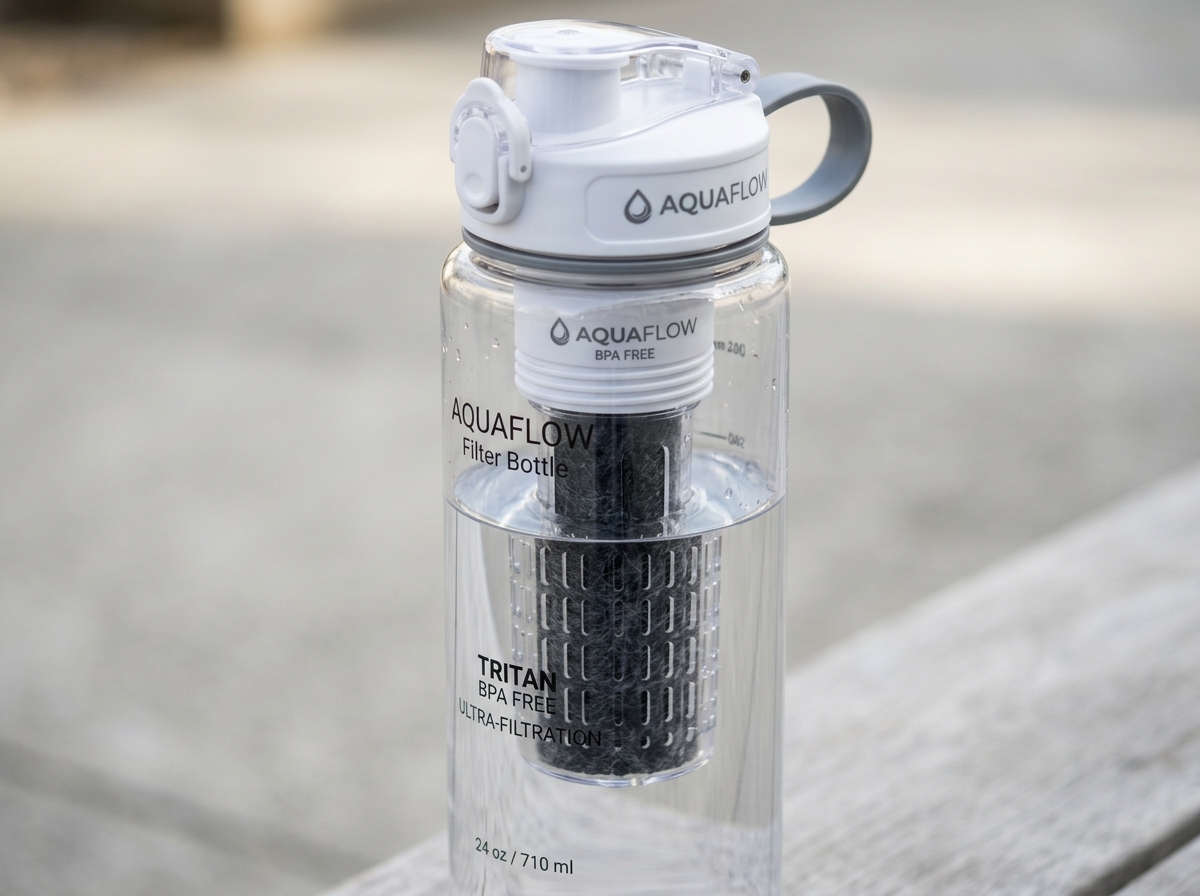
The Advantage of Tritan and Stainless Steel
To avoid these chemical risks, the industry moved toward “medical-grade” materials. The most popular is Tritan plastic. Tritan is a specialized copolyester that is ultra-durable, lightweight, and—most importantly—completely free of all bisphenol compounds. It doesn’t retain smells (no more lingering “old protein shake” scent) and won’t stain or shatter if you drop it on a rock.
Alternatively, many hikers prefer stainless steel. While slightly heavier, stainless steel is naturally chemical-free and incredibly rugged. If you are interested in the broader world of sustainable materials, check out our guide on eco-friendly portable water filtration gear to see how different materials stack up in the wild.
The Health and Environmental Benefits of a BPA Free Filter Bottle
The benefits of switching to a BPA free filter bottle extend far beyond your own biology. It is a win for your wallet and a massive win for the planet.
Reducing Plastic Waste with Every Fill
The statistics regarding plastic waste are staggering. Consider this: one single filter in a high-quality bottle can replace roughly 450 single-use plastic water bottles. If you use a heavy-duty membrane microfilter, like the one found in the LifeStraw Go Series, that single filter can last the equivalent of 8,000 single-use plastic bottles over its lifetime.
Every time you fill up at a park fountain or a mountain stream instead of buying a “disposable” bottle, you are directly reducing the amount of plastic headed for a landfill or the ocean. Reusable systems aren’t just a gadget; they are a lifestyle choice that slashes your carbon footprint.
Improving Water Taste and Purity
Beyond the “big picture” environmental stuff, there is the immediate “tongue and tummy” benefit. Most tap water is treated with chlorine to kill bacteria, which is great for safety but terrible for taste. A BPA free filter bottle equipped with an activated carbon filter pulls that chlorine out, along with organic chemical matter and odors.
Products like the PHILIPS Filtered Water Bottle are designed specifically to transform standard tap water into something that tastes like it came from a premium spring, making it much easier to hit your daily hydration goals without the “swimming pool” aftertaste.
Advanced Filtration Technologies and Safety Certifications
How does a small straw or a tiny disc inside a bottle actually make water safe? It’s not magic; it’s high-level engineering.
Contaminants Removed by Modern Filters
There are three main technologies you’ll encounter in a BPA free filter bottle:
- Hollow Fiber Membranes: These act like a bundle of microscopic straws with tiny holes (usually 0.1 to 0.2 microns). They physically block 99.999% of bacteria (like E. coli) and parasites (like Giardia).
- Activated Carbon: This doesn’t “block” particles so much as “grab” them. It’s excellent for chemicals, pesticides, and improving taste.
- Electro-adsorptive Media: This uses a slight electrical charge to pull contaminants—including some viruses—out of the water as it passes through.
Some advanced bottles even use UV-C LED lights to scramble the DNA of pathogens, though these are often “purifiers” rather than “filters” and work best on clear water. For a deeper dive into the mechanics, see our backpacker’s guide to using water bottles with built-in filters.
The Importance of Third-Party Testing
You shouldn’t just take a manufacturer’s word for it. Look for certifications from independent organizations:
- NSF/ANSI 42: Covers aesthetic effects (taste and odor).
- NSF/ANSI 53: Covers health effects (removal of specific contaminants like lead).
- EPA Standards: Specifically the “Guide Standard and Protocol for Testing Microbiological Water Purifiers.”
Third-party testing ensures that when a bottle says it removes 99.99% of parasites, it has actually been put through the ringer in a lab to prove it.
Selecting the Best Bottle for Hiking, Travel, and Daily Use
Choosing the right BPA free filter bottle depends entirely on where you plan to take it. A bottle that is perfect for a Manhattan office might fail you in the middle of the Sierra Nevadas.
Key Features to Look For
- Flow Rate: Some filters require a lot of “suction” (some users describe it as “drinking a thick milkshake”). If you want fast hydration, look for “squeeze” bottles or high-flow straws.
- Capacity: 20 oz is standard for the gym, but for long hikes, you’ll want at least 32 oz (1 Liter).
- Durability: Look for a “MuckGuard” or a protective cap to keep the mouthpiece clean when you set your pack down in the dirt.
- Weight: An ultralight filter might weigh only 59g (like the Katadyn BeFree), while a stainless steel insulated bottle can be significantly heavier.
Use Cases: From Gym to Global Travel
| Feature | Everyday Hydration | Backcountry Hiking | International Travel |
|---|---|---|---|
| Primary Filter | Activated Carbon | Hollow Fiber Membrane | Electro-adsorptive/UV |
| Targets | Chlorine, Lead, Taste | Bacteria, Protozoa, Silt | Viruses, Bacteria, Chemicals |
| Material | Tritan or Glass | Squeezable TPU or Tritan | Insulated Stainless Steel |
| Example Source | Office Tap | Stream or Lake | Hotel Tap / Airport |
For more specific advice on matching a bottle to your trail speed, read our article on how to choose the best portable water filter for your hiking needs.
Maintenance, Lifespan, and System Limitations
A BPA free filter bottle is an investment, and like any piece of gear, it needs a little love to keep performing.
Maintaining Your Bottle for Longevity
Most bottles are dishwasher safe (top rack), but never put the filter itself in the dishwasher. The high heat and detergents will ruin the delicate membranes. We recommend hand-washing the straw and mouthpiece with warm, soapy water.
When you get back from a trip, don’t just throw the bottle in the cupboard. If it’s still damp, mold can grow. Always air-dry the components separately. For more tips on hygiene, check out our guide on keeping water bottles clean during outdoor trips.

When Filtration Systems Fall Short
It is vital to know what your BPA free filter bottle cannot do:
- Saltwater: These filters will not desalinate water. Drinking filtered saltwater will still make you very sick.
- Chemical Spills: Most portable filters are not designed to remove industrial chemicals or fuel from water.
- Freezing: If water freezes inside a hollow fiber membrane, the ice expands and can crack the fibers, rendering the filter useless. If you are hiking in sub-zero temps, keep your filter in an inside pocket near your body.
Frequently Asked Questions about Filtered Bottles
How often should I replace my water bottle filter?
It depends on the technology. Activated carbon filters usually last about 2 months or 40 gallons. Membrane microfilters can last much longer—up to 1,000 gallons (about 4,000 liters). A good rule of thumb: if the water starts tasting “off” or if it becomes significantly harder to pull water through the straw, it’s time for a swap.
Can I use a filtered bottle for hot liquids or coffee?
Generally, no. Most filters are designed for cold or room-temperature water. Hot water can damage the filter media and may increase the risk of leaching even in BPA-free plastics. Stick to water and ice.
Do these bottles remove fluoride and TDS?
Most standard carbon filters do not significantly reduce Total Dissolved Solids (TDS) or minerals like fluoride. If fluoride removal is your primary goal, you need a specialized filter like those from Clearly Filtered, which are specifically engineered to target over 200 contaminants including fluoride and glyphosate.
Conclusion
At Total Cobre, we believe that clean water shouldn’t come at the cost of your health or the environment. Choosing a BPA free filter bottle is one of the simplest ways to ensure you stay hydrated safely, whether you’re tackling a 20-mile ridge walk or just navigating your daily commute.
By understanding the difference between simple plastic and medical-grade Tritan, and knowing which filtration technology fits your lifestyle, you can ditch the single-use plastics for good. Ready to find your perfect match? Explore our full range of water filtration gear and gear up for your next adventure with confidence.
