
Water on the West Coast Trail: What You Need to Know Before You Go
West Coast Trail water sources are available at every one of the 13 official campgrounds along the 75 km route — but every single drop must be treated before drinking.
Quick answer for hikers:
| Location | Water Available? | Notes |
|---|---|---|
| All 13 campgrounds | Yes | Freshwater creek nearby; treat before drinking |
| KM30 to KM40 (Ditidaht to Dare Beach) | No reliable source | ~10 km dry stretch; carry extra water |
| Cribs Creek to Nitinat Narrows | Limited | ~9.5 km; plan carefully |
| Nitinat Narrows to Tsusiat Falls | Limited | ~7 km between sources |
| Thrasher Cove to Owen Point | Limited | ~3 miles; tidal access issues |
| Tidal creek mouths | Unreliable | Saltwater intrusion at high tide; hike upstream |
The West Coast Trail is a rainforest route. It receives around 330 cm of rain every year. So most hikers assume water won’t be a problem.
That assumption gets people sick.
Yes, freshwater creeks cross the trail constantly. But many sit at tidal zones where saltwater mixes in at high tide. Others flow through areas with upstream logging activity or wildlife, carrying invisible pathogens like Giardia and Cryptosporidium. One popular campsite — Tsusiat Falls — is heavily used, with hikers bathing and washing upstream from where others collect drinking water.
The good news: with the right gear and a bit of planning, staying hydrated on the WCT is totally manageable. This guide covers every key water source, the dry stretches to watch out for, and exactly how to treat and carry water so you stay healthy from start to finish.
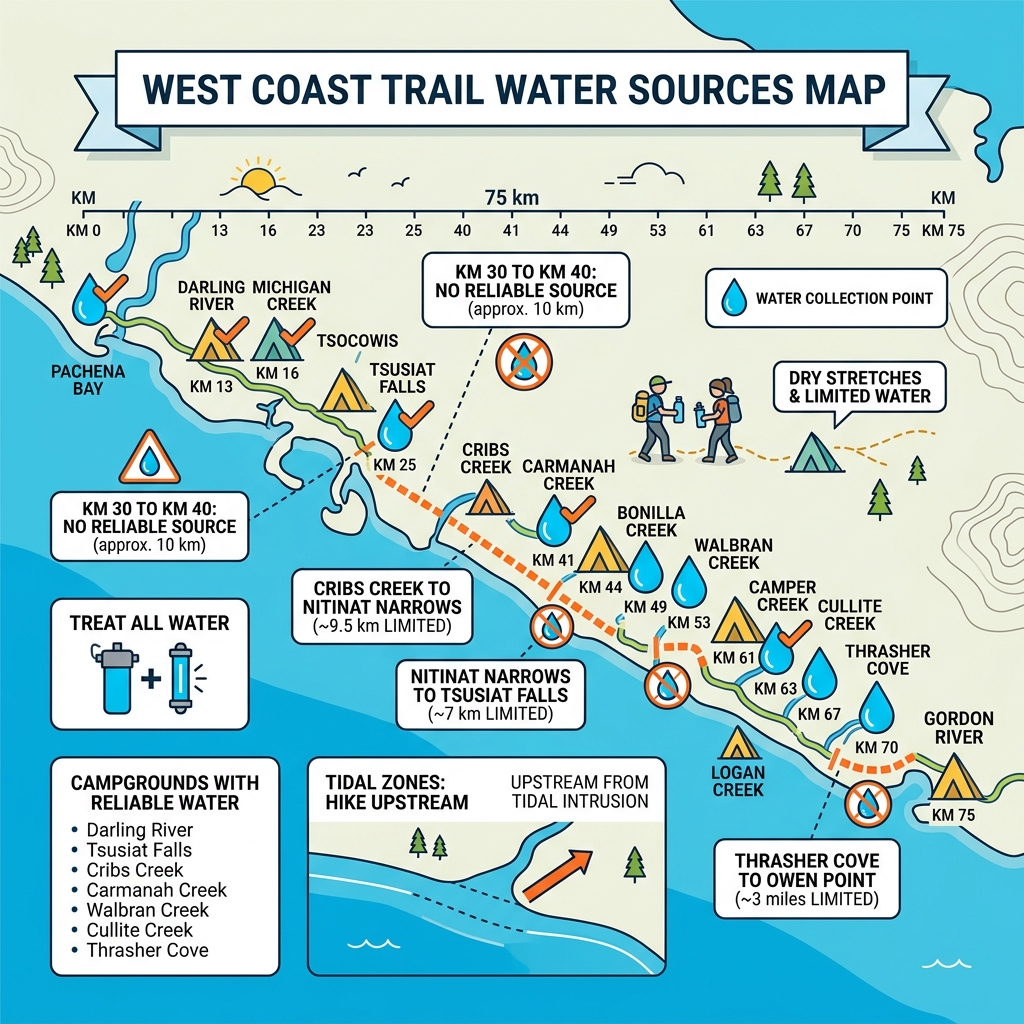
Mapping the Main West Coast Trail Water Sources
When we talk about west coast trail water sources, we are usually talking about the lifeblood of the trail: the creeks and rivers that spill out of the rainforest and across the beaches into the Pacific. Navigating these sources requires more than just finding them on a map; it requires understanding how they behave with the tides and the seasons.
The Campsites on the West Coast Trail are strategically placed near these sources. However, the quality and accessibility of the water can vary wildly from one kilometer to the next.
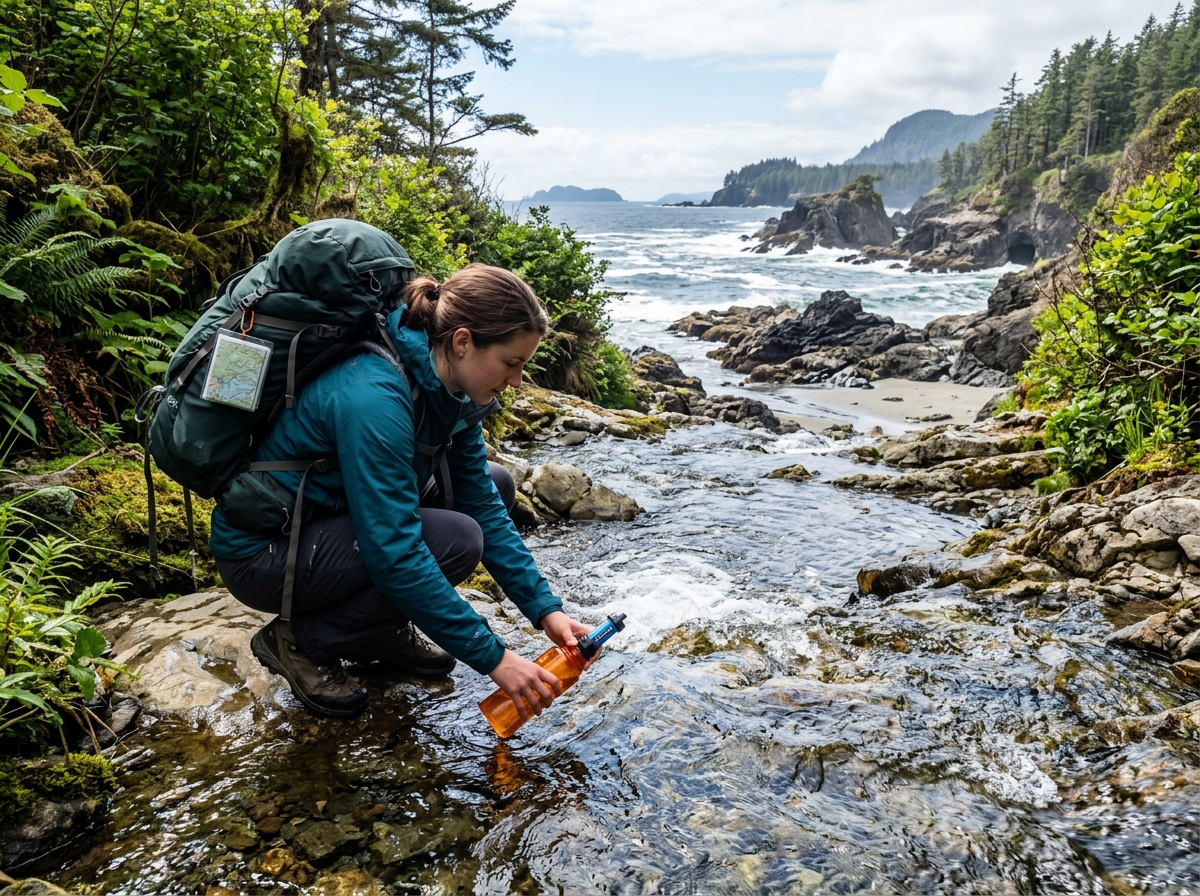
Reliable Water Sources at Campgrounds
Every one of the 13 official campgrounds has a nearby freshwater source. While some are small trickles, others are roaring rivers. Here is a breakdown of the primary water sources at the most popular stops:
- Michigan Creek (KM12): A reliable creek, but it can be crowded. Because it’s a popular first or last stop, the human impact here is high.
- Darling River (KM14): Often cited as having the best water in the northern section. The emerald pool at Darling Falls is a stunning place to fill up, though many tired hikers walk right past it.
- Tsusiat Falls (KM25): The “resort” of the WCT. The water is abundant, but because people swim and bathe here, you must be extremely diligent about where you collect and how you treat it.
- Cribs Creek (KM41.5): A smaller source that can get silty or low in dry summers. It is also highly tidal.
- Carmanah Creek (KM46): A large, beautiful river. You’ll likely need to wade or use the cable car here, making water access easy.
- Walbran Creek (KM53): A deep, tea-colored creek that is perfect for a swim, but the tannins can clog some fine-pore filters quickly.
- Camper Bay (KM62): A reliable creek tucked into a deep cove. Like many southern sites, it is heavily shaded and the water stays cool.
- Thrasher Cove (KM70): The water source here is a small creek that can become a mere trickle during a dry August. It is also very tidal, meaning if you don’t time it right, you’ll be drinking salt.
For those new to the backcountry, we recommend checking out our essential tips for finding safe water sources while hiking to sharpen your “water eyes” before hitting the trail.
The Longest Dry Stretches Between West Coast Trail Water Sources
While the WCT is generally wet, there are “dead zones” where you won’t find a reliable drop for hours. The most notorious stretch is between KM30 (the Ditidaht luxury cabins area) and KM40 (Dare Beach). This 10 km section can feel much longer when you are climbing ladders or trudging through mud in the humid forest.
Other dry or difficult stretches include:
- Cribs Creek to Nitinat Narrows: Approximately 9.5 km (6 miles).
- Nitinat Narrows to Tsusiat Falls: Roughly 7 km (4.5 miles).
- Thrasher Cove to Owen Point: Only about 5 km (3 miles), but the technical terrain means you might spend three hours on this section. If the tide is high, the small freshwater seeps along the cliffs are underwater.
Proper planning of water stops on long hikes is essential here. We always suggest carrying at least two liters when leaving camp, especially if the forecast calls for a rare sunny day.
The Risks of Untreated Water on the West Coast
Don’t let the pristine, misty beauty of Vancouver Island fool you. The water here is “wild” in every sense of the word. Many of the creeks on the WCT have a distinct orange or brown tint. This is usually caused by tannins—organic matter from the rainforest—and while tannins aren’t harmful, they often hide things that are.
Why You Must Treat Every Drop of West Coast Trail Water Sources
We cannot stress this enough: treat every drop. Even if the water looks crystal clear and is flowing over a beautiful waterfall, the risks are real.
- Upstream Activity: Many of the creeks originate in areas with active or historical logging. This can lead to runoff or contamination from industrial bypass.
- Wildlife: This is the home of bears, wolves, cougars, and elk. Animals defecate in or near the water, introducing pathogens directly into the stream.
- Human Impact: With 75 hikers starting every day, the “human factor” is significant. Not everyone follows Leave No Trace principles perfectly.
- Beaver Fever: Giardia is present in many BC coastal watersheds. Getting a case of “Beaver Fever” while 30 km from the nearest trailhead is a recipe for an emergency evacuation.
For a deeper dive into why “clear” doesn’t mean “clean,” read our guide on safety tips for drinking from natural water sources.
Common Pathogens in Coastal Streams
The primary enemies on the WCT are protozoa and bacteria. Understanding the impact of bacteria and protozoa in streams is the first step in defending yourself.
- Giardia and Cryptosporidium: These are microscopic parasites that cause severe gastrointestinal distress. They are hardy and can survive in cold water for a long time.
- Coliform Bacteria: Often introduced by warm-blooded animals (including humans), these can lead to standard food-poisoning-type symptoms that will ruin your hike.
- Viral Risks: While less common in North American wilderness than in other parts of the world, viruses can still be present in areas with high human density.
Knowing these common waterborne pathogens hikers should know helps you choose the right treatment method.
Best Methods for Treating and Filtering Trail Water
On the West Coast Trail, your water treatment system needs to be two things: reliable and fast. When you arrive at camp after an 8-hour day of mud and ladders, the last thing you want is a complicated chemistry set.
Essential Gear for Water Management
In our experience at Total Cobre, we’ve seen almost every type of filter fail at some point. The “perfect” setup usually involves a primary filter and a backup.
- Hollow Fiber Filters (Squeeze or Gravity): These are the most popular. They are lightweight and remove 99.99% of bacteria and protozoa. However, the silty, tannin-heavy water of the WCT can clog them. Always bring a syringe to backflush your filter.
- Gravity Bags: If you are in a group, a gravity system is a lifesaver. Fill a 4L bag, hang it from a tree, and let physics do the work while you set up your tent.
- UV Light Purifiers: These are great for killing viruses and work quickly, but they don’t remove silt or “floaties.” They also require batteries.
- Backup Tablets: Always, always carry chlorine dioxide or iodine tablets. If your filter cracks after a fall on a slippery boardwalk, these tablets are your only way to get safe water.
Check out our full breakdown on how to safely filter river water on your hikes for more gear recommendations.
Proven Purification Strategies
For the best results, we recommend a multi-stage approach. If the water is particularly murky (common after a heavy rain), strain it through a bandana or a coffee filter first. This prevents your expensive filter from clogging.
- Filtration: Removes the big stuff (protozoa and bacteria).
- Purification: Uses chemicals or UV to kill the tiny stuff (viruses).
Using proven methods to purify river water for safe drinking ensures that even the sketchiest-looking puddle can become life-saving hydration. You can also learn more about navigating how to purify river water effectively or purifying water in remote areas to ensure you’re prepared for the rugged BC coast.
Pro Tips for Navigating Tides and Seasonal Lows
The Pacific Ocean is a beautiful neighbor, but it’s a terrible bartender. Many west coast trail water sources flow directly onto the beach. At high tide, the ocean pushes saltwater several meters up into the creek beds.
The Golden Rule of WCT Water: Always walk as far upstream as safely possible to collect your water. If the tide is coming in, you might need to hike 50 or 100 meters into the forest to find a spot where the water is still fresh.
Strategies for Low-Water Scenarios
During a particularly dry July or August, some of the smaller creeks noted on the West Coast Trail Map – Official Parks Canada 2025 Edition may dry up or become stagnant.
- Look for Deep Pools: Even if a creek isn’t flowing visibly, there may be deep, cool pools further upstream.
- Rainwater Collection: If it’s pouring (and it often is), you can use your tent fly or a tarp to funnel water into a bottle. Just make sure the tarp is clean!
- Morning Collection: Creeks often flow a bit more strongly in the morning after a night of cool temperatures and less evaporation.
For more on staying safe when the taps run dry, see our water safety tips for remote hiking adventures.
Choosing Trails with Reliable Access
When planning your itinerary, try to aim for the “big” water sources for your overnight stays. Sites like Walbran, Carmanah, and Tsusiat are virtually guaranteed to have water year-round. If you choose to “wild camp” (which is allowed in most areas outside of First Nations land), you must be much more careful about choosing hiking trails with reliable water access.
Frequently Asked Questions about WCT Water
Is there drinking water at every West Coast Trail campground?
Yes, all 13 official campgrounds have a nearby freshwater source. However, the “reliability” changes with the tide. At sites like Thrasher Cove or Cribs Creek, the mouth of the creek becomes salty at high tide. You must either wait for the tide to go out or hike upstream into the bush to find the freshwater line. Always prioritize choosing hiking trails with clean water access when planning your daily mileage.
How much water should I carry between sources?
We recommend carrying at least 2 liters per person. While water is frequent, the physical exertion of the WCT is high. You will sweat more than you realize, even in the fog. On the dry stretch between KM30 and KM40, consider bumping that up to 3 liters if it’s a warm day. Proper planning of effective water stops on long hikes will keep your pack weight manageable without risking dehydration.
Can I drink the water at Tsusiat Falls without filtering?
Absolutely not. Tsusiat Falls is one of the most beautiful spots on the trail, but it is also a high-traffic area. People swim in the pool at the base of the falls and often wash their gear or themselves in the stream above. This creates a high risk of contamination. Use safe techniques for filtering river water while hiking to ensure you don’t take home an unwanted parasitic souvenir.
Conclusion
At Total Cobre, we believe that the right gear makes the difference between a “hike from hell” and the adventure of a lifetime. The west coast trail water sources are abundant, but they require respect and the right treatment strategy.
By carrying a primary filter, a backup chemical treatment, and a solid understanding of the tide tables, you can focus on the whales and the old-growth cedars rather than worrying about your next drink. Remember to always collect upstream, treat every drop, and plan your effective water stops on long hikes with care.
Stay hydrated, stay safe, and enjoy the “Graveyard of the Pacific”—just don’t let your hydration levels end up there!
