
The Best Filter for Camping: Quick Answer Before You Read On
The best filter for camping depends on your trip type, group size, and water source — but here are the top picks to match common needs:
| Use Case | Top Pick | Why |
|---|---|---|
| Solo backpacking | LifeStraw Peak Squeeze | Lightest option at 3.8 oz, filters 1L in 35 seconds |
| Small groups (2-4) | Sawyer Squeeze | Massive 100,000-gallon lifetime, versatile setup |
| Large groups / basecamp | Platypus GravityWorks | Hands-free, 1L per 52 seconds, no effort needed |
| Virus protection / international | MSR Guardian Purifier | 0.02-micron pores, removes viruses, bacteria, protozoa |
| Ultralight backup | Aquamira Drops or chemical tablets | Near-zero weight, kills all pathogens with enough wait time |
Even the most crystal-clear mountain stream can make you seriously sick. Protozoa like Giardia and Cryptosporidium, bacteria like E. coli, and in some regions even viruses can all be lurking in water that looks perfectly safe to drink.
The stakes are real. Getting hit with a waterborne illness miles from the trailhead is not just miserable — it can be dangerous.
The good news: the gear available today is lighter, faster, and more reliable than ever. But the options are also overwhelming. Squeeze filters, gravity systems, UV pens, pump filters, chemical drops — each works differently and suits different situations.
This guide cuts through the noise. We compare the most popular systems side by side so you can pick the right one for your trip — whether you’re a solo ultralight runner or leading a family basecamp expedition.
Water Filters vs. Purifiers: Which Do You Need?
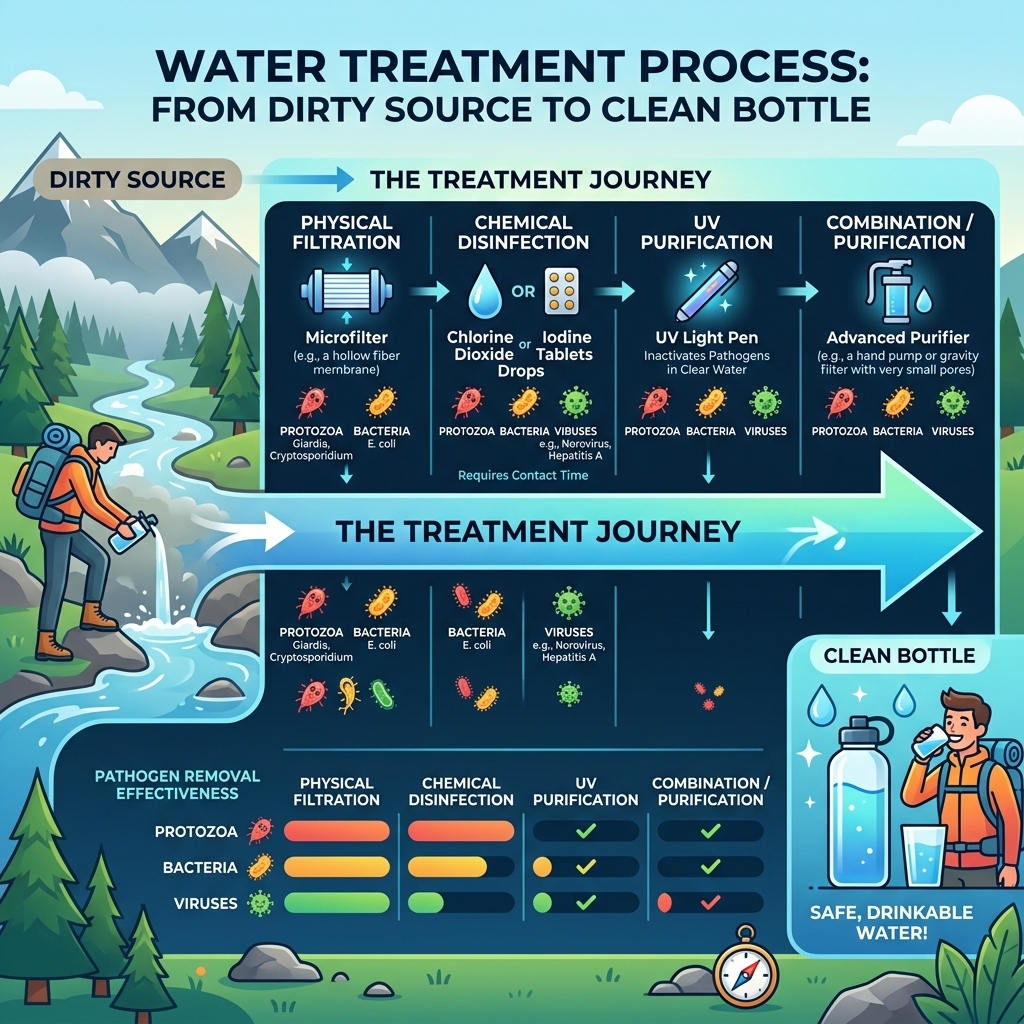
Before we dive into specific models, we need to clear up a common point of confusion: the difference between a filter and a purifier. Many campers use these terms interchangeably, but in backcountry safety, they mean very different things.
The Micron Mystery
It all comes down to pore size. Think of a water treatment device like a high-tech spaghetti strainer.
- Water Filters: These typically have a pore size of about 0.1 to 0.2 microns. This is small enough to physically strain out protozoa (like Giardia and Cryptosporidium) and bacteria (like E. coli and Salmonella). For most camping trips in the United States and Canada, a high-quality filter is all you need.
- Water Purifiers: These go a step further. They are designed to combat viruses, which are about 10 times smaller than bacteria. To catch a virus physically, a device needs a pore size of roughly 0.02 microns. Alternatively, purifiers use UV light or chemicals to “inactivate” (kill or neutralize) the viruses.
When to Level Up to a Purifier
If you are sticking to high-alpine streams in North America, a standard filter like the LifeStraw Peak Series All in One Filter | LifeStraw Water Filters & Purifiers is usually sufficient. However, you should consider Durable Camping Water Purifiers if:
- You are traveling internationally: In developing nations or areas with poor sanitation, waterborne viruses like Norovirus or Hepatitis A are a significant risk.
- You are in high-traffic areas: If you are camping downstream from a popular trail or in an area with heavy human or livestock waste, the risk of viral contamination increases.
- You have a compromised immune system: Infants, the elderly, or those with health conditions should always opt for the highest level of protection.
To meet EPA and NSF P231 standards, a purifier must remove 99.99% of viruses, in addition to the bacteria and protozoa that standard filters handle.
Main Types of Water Treatment Systems for Campers
Choosing the best filter for camping often comes down to how you want to interact with your water. Do you want to squeeze it, pump it, or let gravity do the work while you take a nap?
Squeeze Filters
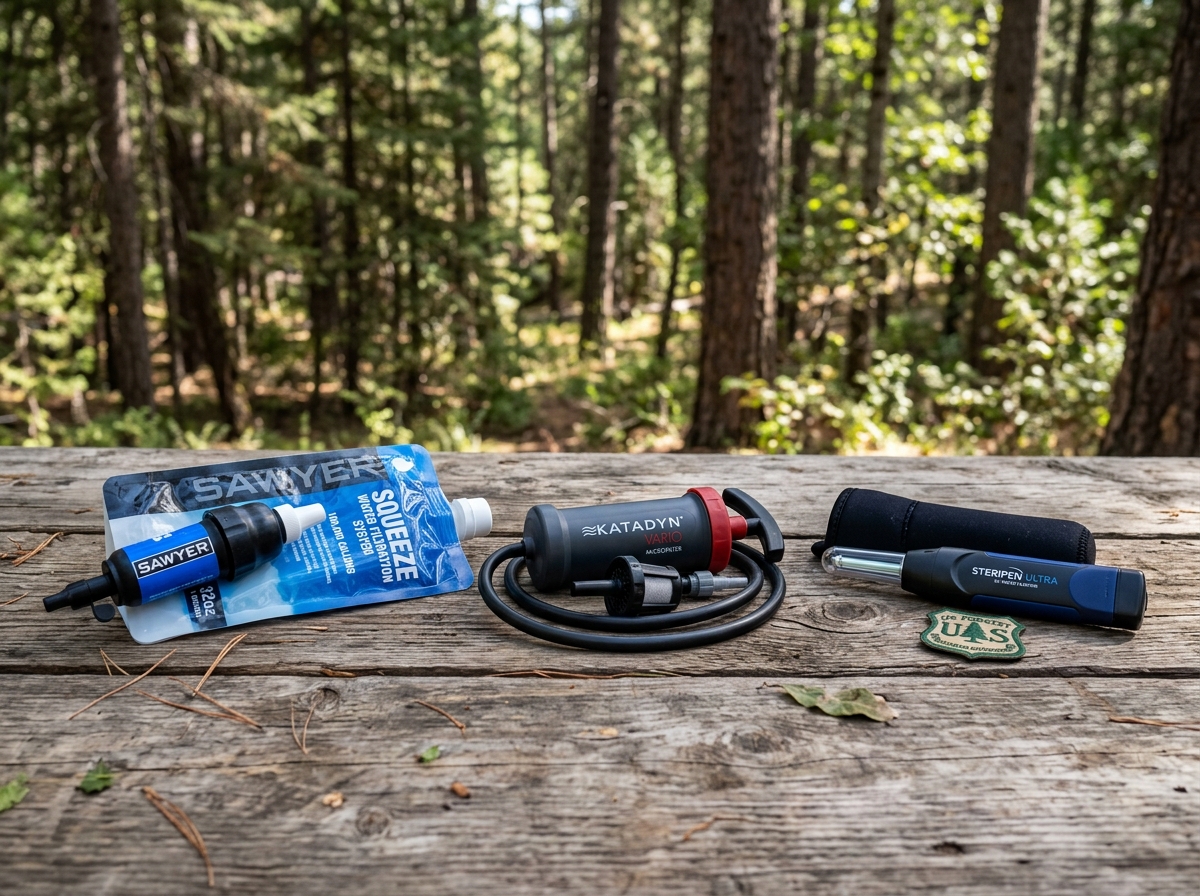
These are the darlings of the thru-hiking world. They consist of a hollow-fiber filter that screws onto a collapsible pouch. You fill the pouch with “dirty” water and squeeze it through the filter into your mouth or a clean bottle.
- Top Pick: The Sawyer Mini Water Filter is a classic, weighing just 2 ounces and rated for up to 100,000 gallons.
- Pros: Lightweight, affordable, and no moving parts to break.
- Cons: Requires hand strength; bags can occasionally leak or tear under high pressure.
Gravity Systems
If you’re tired of “working” for your water, gravity is your best friend. You fill a large reservoir, hang it from a tree, and let the weight of the water push itself through an inline filter. We’ve found these are game-changers for groups. You can learn more about How Gravity Water Filters Make Camping Easier in our dedicated guide.
- Pros: Hands-free, high volume (the MSR AutoFlow XL holds 10L), and great for basecamps.
- Cons: Heavier than squeeze filters; requires a place to hang the bag.
Pump Filters
The “old school” reliable method. You drop a hose into the water source and use a hand pump to force water through a ceramic or pleated element.
- Pros: Can pull water from very shallow seeps or puddles where a bag can’t reach. Usually very durable.
- Cons: Heavy and can be “tiresome” to use (as one of our testers put it).
UV Light and Chemicals
UV purifiers like the Steripen use ultraviolet rays to scramble the DNA of pathogens, preventing them from reproducing. Chemical treatments (drops or tablets) use chlorine dioxide or iodine to kill bugs.
- UV Pros: Extremely fast (90 seconds per liter) and effective against viruses.
- Chemical Pros: The ultimate lightweight backup.
- Cons: UV requires batteries and doesn’t work well in “chunky” or murky water. Chemicals often have a wait time (up to 4 hours for Cryptosporidium) and can leave a funky aftertaste. Check out our Don’t Drink The Mud A Guide To UV Water Purifiers For Camping for a deeper look at light-based tech.
Boiling Water
The gold standard for safety. Boiling water for 1 minute (3 minutes at high altitudes) kills everything. However, it’s fuel-intensive and leaves you with hot water when you’re likely already sweaty.
How to Choose the Best Filter for Camping Based on Your Needs
We’ve spent thousands of miles on the trail testing these units. When you’re standing in the gear aisle, keep this data in mind:
| Model | Measured Weight | Flow Rate (Tested) | Filter Lifespan |
|---|---|---|---|
| Sawyer Squeeze | 3.0 oz | 1.5 L / min | 100,000+ gal |
| LifeStraw Peak Squeeze | 3.8 oz | 1.7 L / min | 500 gal |
| Platypus GravityWorks | 11.5 oz | 1.15 L / min | 396 gal |
| MSR Guardian | 20.5 oz | 2.5 L / min | 2,600+ gal |
| Katadyn BeFree | 2.3 oz | 2.0 L / min | 264 gal |
Portability and Weight
For the ultralight crowd, every gram counts. If you are fast-packing, you’ll want to focus on Evaluating The Best Lightweight Water Purifiers For Hiking. A Sawyer Mini or a LifeStraw Solo can sit in a side pocket unnoticed. If you’re car camping, weight doesn’t matter, so prioritize ease of use and volume.
Cost vs. Value
Don’t just look at the sticker price. A $30 filter that lasts 500 gallons might seem like a deal, but a $45 Sawyer Squeeze that lasts a “lifetime” (100,000 gallons) is the better long-term investment. For those on a strict budget, we’ve rounded up the Top-Rated Portable Water Filters Under 50 to help you save your cash for better trail snacks.
Solo vs. Group: Finding the Best Filter for Camping
If you are on a solo mission, a “sip-as-you-go” bottle filter or a small squeeze system is perfect. You’re only responsible for your own hydration, and you can filter as needed. We have a guide on Searching for the Best Water Filters to Keep You Hydrated on Trails specifically for solo adventurers.
However, if you are camping with a group of four or more, a single squeeze filter will turn into a chore very quickly. In those cases, Gravity-Fed Water Filters The Perfect Solution For Group Camping Trips are the way to go. You can filter 4 to 10 liters at once while the group sets up tents or starts the fire.
Maintenance Tips for the Best Filter for Camping
A water filter is a precision instrument. If you don’t take care of it, it will fail you when you need it most.
- Backflushing is Non-Negotiable: Over time, silt and minerals clog the microscopic pores. Most filters come with a syringe or a cleaning coupling. Use it! Backflushing with clean water restores the flow rate.
- The Freeze Factor: This is the most common way filters break. If water stays inside the hollow fibers and freezes, it expands and cracks the filter, rendering it useless. If you’re camping in the cold, sleep with your filter in your sleeping bag.
- Avoid Cross-Contamination: Keep your “dirty” bags and “clean” bottles separate. Never let the intake hose touch the output nozzle. It only takes one drop of raw water to ruin your trip.
- Pre-Filtering: If the water is muddy, wrap a bandana or coffee filter over the intake. This keeps the “big chunks” out and extends the life of your expensive filter element.
For more detailed upkeep, check out our Portable Water Filter Camping Tips 2026 and our list of Sip-ly The Best Top Portable Water Purifying Systems.
Frequently Asked Questions About the Best Filter for Camping
How do I treat murky or turbid water?
Murky water is a filter-killer. Glacial silt, leaf debris, and mud will clog a standard squeeze filter in seconds.
- The Settle Method: Fill a large bucket or bag with the murky water and let it sit for an hour. The sediment will settle to the bottom, allowing you to scoop the clearer water off the top.
- The MSR Guardian Advantage: If you frequently camp in areas with high turbidity (like the Colorado River), the MSR Guardian is the best filter for camping. It has a unique self-cleaning mechanism that uses 10% of every stroke to backflush the filter automatically.
- Flocculation: Some chemical kits include a powder that binds to dirt and sinks it to the bottom.
For a deep dive into dealing with “the thick stuff,” see our Water Filters For Camping Reviews Guide.
When should I use chemical backups?
We always recommend carrying a backup. Mechanical filters can break, freeze, or clog.
- Chlorine Dioxide (Aquamira): This is our preferred backup. It kills bacteria, viruses, and eventually Cryptosporidium. It doesn’t have the harsh taste of iodine.
- Iodine: Effective and cheap, but many people find the taste unbearable, and it isn’t effective against Cryptosporidium.
If your primary filter fails, you’ll be glad you read our Emergency Water Filter Reviews For Hikers.
Does boiling water remove all pathogens?
Yes. Boiling is the most effective method because it uses heat to denature the proteins in every type of pathogen—bacteria, protozoa, and viruses.
- The 1-Minute Rule: At sea level, a rolling boil for 1 minute is plenty.
- Altitude Adjustment: Above 6,500 feet (2,000 meters), the boiling point of water is lower, so you must boil for 3 minutes to ensure everything is dead.
- The Downside: It consumes a lot of fuel. If you are on a long backpacking trip, relying solely on boiling is usually not practical.
Conclusion
At Total Cobre, we believe that gear reliability is the foundation of a great adventure. Choosing the best filter for camping isn’t just about weight or price—it’s about having the peace of mind that every sip you take is safe.
Whether you opt for the ultralight Sawyer Squeeze for your solo thru-hike or a high-capacity gravity system for your next family reunion in the woods, the right choice is the one that fits your specific needs and that you feel comfortable maintaining in the field.
Ready to gear up for your next trek? Check out our Ultimate Guide to Portable Water Filters for Outdoor Adventures or visit our homepage for More info about outdoor gear services. Safe travels and stay hydrated!
